EU Cyber Resilience Act Readiness
EU Cyber Resilience Act Readiness
EU Cyber Resilience Act Readiness
EU Cyber Resilience Act Readiness
For Manufacturers Selling Products in the European Union
For Manufacturers Selling Products in the European Union
For Manufacturers Selling Products in the European Union
For Manufacturers Selling Products in the European Union
Manufacturers selling products in the EU will soon be required to demonstrate cybersecurity compliance across product development, software components, and supplier ecosystems.
The EU Cyber Resilience Act (CRA) introduces new vulnerability reporting requirements beginning September 2026, with full compliance required by December 2027.
Many organizations are now assessing whether their current documentation, supplier evidence, and product security processes meet these new expectations.
Certivo helps manufacturers understand their exposure and automate compliance evidence across their supply chains.
Manufacturers selling products in the EU will soon be required to demonstrate cybersecurity compliance across product development, software components, and supplier ecosystems.
The EU Cyber Resilience Act (CRA) introduces new vulnerability reporting requirements beginning September 2026, with full compliance required by December 2027.
Many organizations are now assessing whether their current documentation, supplier evidence, and product security processes meet these new expectations.
Certivo helps manufacturers understand their exposure and automate compliance evidence across their supply chains.
Manufacturers selling products in the EU will soon be required to demonstrate cybersecurity compliance across product development, software components, and supplier ecosystems.
The EU Cyber Resilience Act (CRA) introduces new vulnerability reporting requirements beginning September 2026, with full compliance required by December 2027.
Many organizations are now assessing whether their current documentation, supplier evidence, and product security processes meet these new expectations.
Certivo helps manufacturers understand their exposure and automate compliance evidence across their supply chains.
Manufacturers selling products in the EU will soon be required to demonstrate cybersecurity compliance across product development, software components, and supplier ecosystems.
The EU Cyber Resilience Act (CRA) introduces new vulnerability reporting requirements beginning September 2026, with full compliance required by December 2027.
Many organizations are now assessing whether their current documentation, supplier evidence, and product security processes meet these new expectations.
Certivo helps manufacturers understand their exposure and automate compliance evidence across their supply chains.
Get a Cyber Resilience Readiness Snapshot
Get a Cyber Resilience Readiness Snapshot
Get a Cyber Resilience Readiness Snapshot
Schedule a 30-minute executive assessment
Schedule a 30-minute executive assessment
Schedule a 30-minute executive assessment
This Is Most Relevant If Your organization

Manufactures products sold in the European Union
Manufactures products sold in the European Union

Produces devices containing software or connected components
Produces devices containing software or connected components

Relies on third-party firmware, software libraries, or embedded components
Relies on third-party firmware, software libraries, or embedded components

Needs to prepare for upcoming cybersecurity regulatory requirements
Needs to prepare for upcoming cybersecurity regulatory requirements
If this describes your organization, the Cyber Resilience Act likely introduces new operational obligations.
If this describes your organization, the Cyber Resilience Act likely introduces new operational obligations.
If this describes your organization, the Cyber Resilience Act likely introduces new operational obligations.
Quick Cyber Resilience Readiness Snapshot
Answer a few quick questions to see whether your organization may be affected.
Answer a few quick questions to see whether your organization may be affected.
Answer a few quick questions to see whether your organization may be affected.
Schedule a Cyber Resilience readiness discussion to understand your exposure.
Schedule a Cyber Resilience readiness discussion to understand your exposure.
Schedule a Cyber Resilience readiness discussion to understand your exposure.
Key Cyber Resilience Act Milestones
The regulation is already progressing toward implementation.
The regulation is already progressing toward implementation.
The regulation is already progressing toward implementation.
Organizations selling digital or connected products in the EU should be preparing now.
Organizations selling digital or connected products in the EU should be preparing now.
Organizations selling digital or connected products in the EU should be preparing now.
Organizations selling digital or connected products in the EU should be preparing now.
2024–2025
2024–2025
2024–2025
Regulation enters into force and implementation guidance continues to develop.
Regulation enters into force and implementation guidance continues to develop.
Regulation enters into force and implementation guidance continues to develop.
September 2026
September 2026
September 2026
Mandatory vulnerability reporting obligations begin.
Mandatory vulnerability reporting obligations begin.
Mandatory vulnerability reporting obligations begin.
Manufacturers must be prepared to report actively exploited vulnerabilities and incidents to EU authorities.
Manufacturers must be prepared to report actively exploited vulnerabilities and incidents to EU authorities.
December 2027
December 2027
December 2027
Full CRA compliance required for products placed on the EU market.
Full CRA compliance required for products placed on the EU market.
Full CRA compliance required for products placed on the EU market.
Organizations will need to demonstrate documented compliance across product development, security processes, and technical documentation.
Organizations will need to demonstrate documented compliance across product development, security processes, and technical documentation.
Preparing for CRA typically requires coordination across engineering, product security, compliance, and supplier management teams.
Preparing for CRA typically requires coordination across engineering, product security, compliance, and supplier management teams.
Preparing for CRA typically requires coordination across engineering, product security, compliance, and supplier management teams.
Why Organizations Are Preparing Now
Why Organizations Are Preparing Now
Why Organizations Are Preparing Now
Why Organizations Are Preparing Now
While full CRA enforcement begins in 2027, the operational changes required to demonstrate compliance are significant.
While full CRA enforcement begins in 2027, the operational changes required to demonstrate compliance are significant.
While full CRA enforcement begins in 2027, the operational changes required to demonstrate compliance are significant.
Manufacturers preparing today are typically focusing on:
Manufacturers preparing today are typically focusing on:
mapping product security documentation
identifying supplier cybersecurity evidence gaps
establishing vulnerability monitoring processes
aligning engineering and compliance teams around CRA requirements
mapping product security documentation
identifying supplier cybersecurity evidence gaps
establishing vulnerability monitoring processes
aligning engineering and compliance teams around CRA requirements
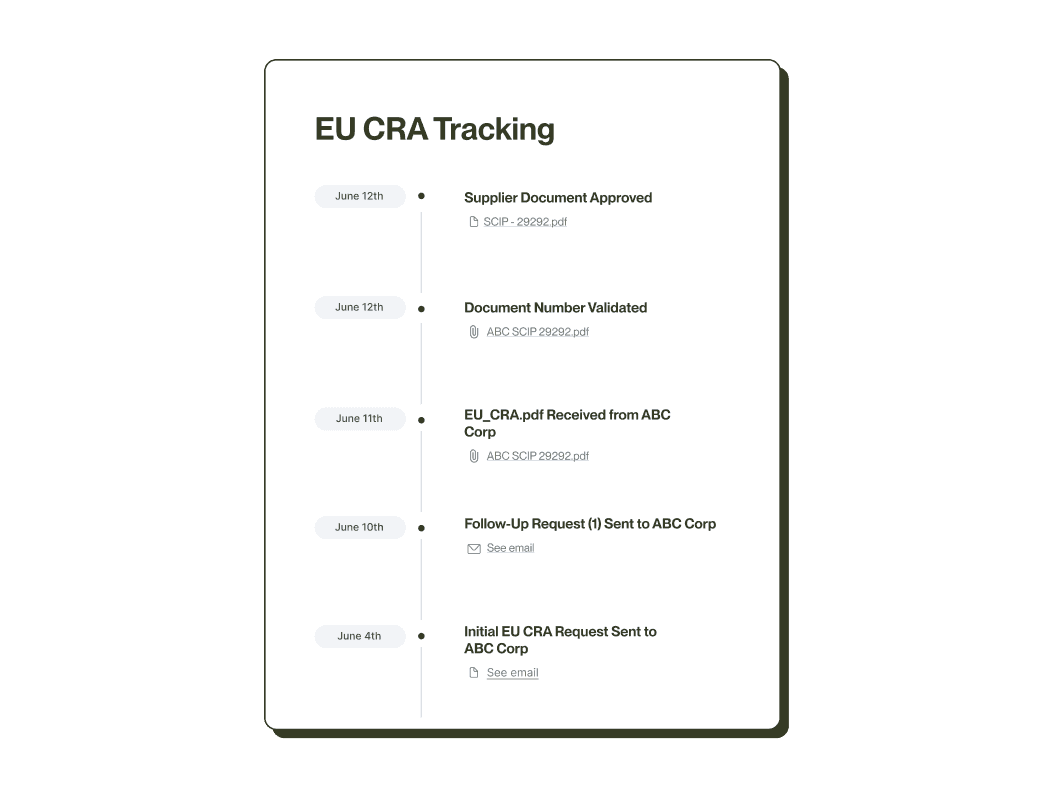
Many organizations discover that the required evidence already exists—but is scattered across engineering systems, supplier documentation, and internal security programs.
Many organizations discover that the required evidence already exists—but is scattered across engineering systems, supplier documentation, and internal security programs.
What CRA Compliance Requires
The Cyber Resilience Act establishes a lifecycle approach to product cybersecurity.
The Cyber Resilience Act establishes a lifecycle approach to product cybersecurity.
The Cyber Resilience Act establishes a lifecycle approach to product cybersecurity.
Secure Development
Secure Development
Secure Development
Products must be designed and developed using secure-by-design principles.
Vulnerability Management
Vulnerability Management
Vulnerability Management
Organizations must track vulnerabilities and maintain processes for remediation and disclosure.
Technical Documentation
Technical Documentation
Technical Documentation
Manufacturers must maintain documentation demonstrating compliance with CRA requirements.
Supply Chain Accountability
Supply Chain Accountability
Supply Chain Accountability
Security obligations extend to software components, firmware, open-source libraries, and suppliers.
Incident and Vulnerability Reporting
Incident and Vulnerability Reporting
Incident and Vulnerability Reporting
Organizations must be prepared to report certain vulnerabilities and incidents to EU authorities beginning in 2026.
These expectations introduce operational complexity across engineering, security, and compliance teams.
These expectations introduce operational complexity across engineering, security, and compliance teams.
These expectations introduce operational complexity across engineering, security, and compliance teams.
Why Manufacturers Use Certivo
Preparing for regulatory compliance often becomes a manual project across multiple teams.
Preparing for regulatory compliance often becomes a manual project across multiple teams.
Preparing for regulatory compliance often becomes a manual project across multiple teams.
Certivo replaces fragmented compliance work with a continuous, automated system.
Certivo replaces fragmented compliance work with a continuous, automated system.
Certivo replaces fragmented compliance work with a continuous, automated system.
Ingest
Ingest
Ingest
Ingest
Collect product security documentation, supplier security evidence, and supporting compliance artifacts.
Collect product security documentation, supplier security evidence, and supporting compliance artifacts.
Collect product security documentation, supplier security evidence, and supporting compliance artifacts.
Prove
Prove
Prove
Prove
Automatically generate audit-ready compliance documentation and evidence.
Automatically generate audit-ready compliance documentation and evidence.
Automatically generate audit-ready compliance documentation and evidence.
Interpret
Interpret
Interpret
Interpret
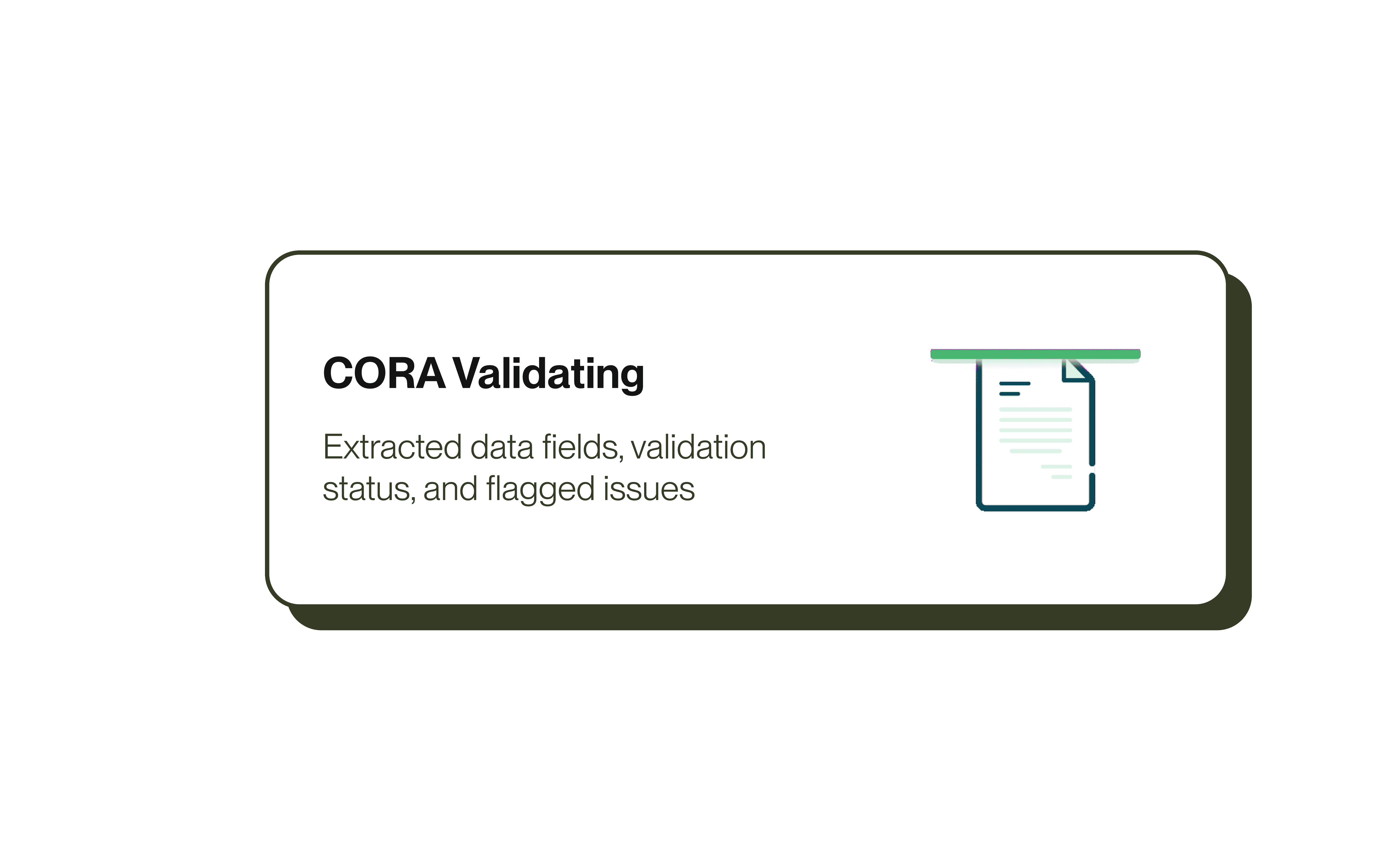
AI models map documentation against regulatory frameworks, including the Cyber Resilience Act.
AI models map documentation against regulatory frameworks, including the Cyber Resilience Act.
AI models map documentation against regulatory frameworks, including the Cyber Resilience Act.
Monitor
Monitor
Monitor
Monitor
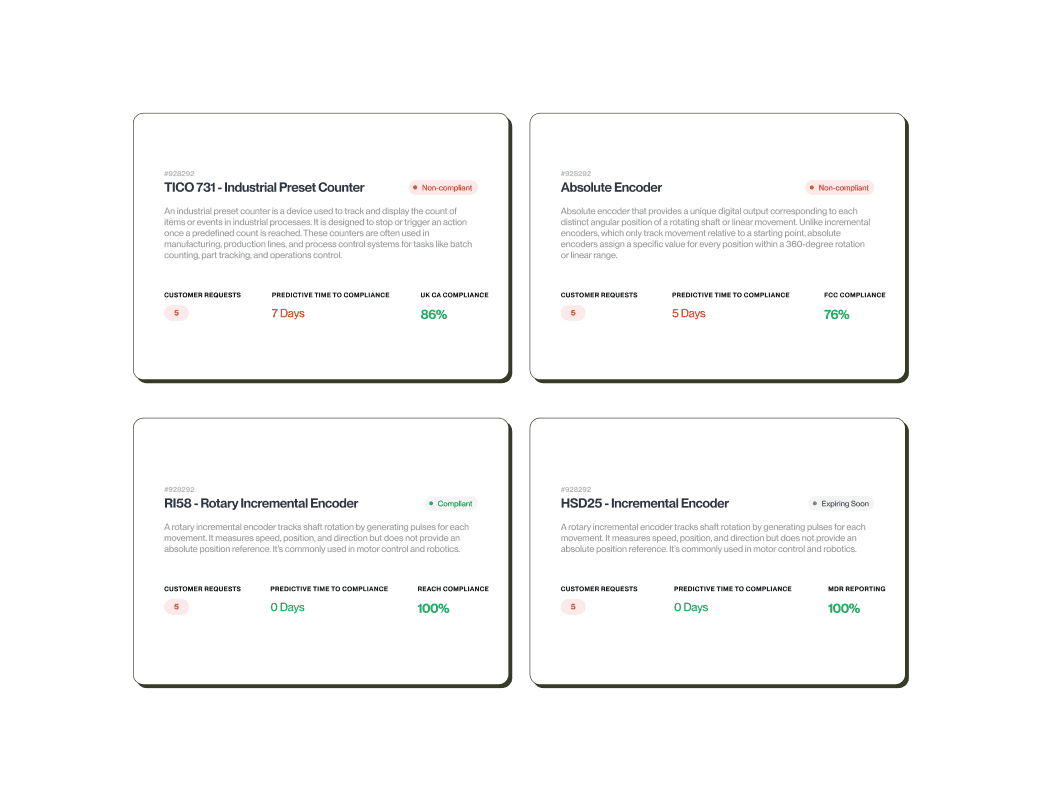
Continuously track regulatory updates, supplier documentation status, and compliance exposure.
Continuously track regulatory updates, supplier documentation status, and compliance exposure.
Continuously track regulatory updates, supplier documentation status, and compliance exposure.
The result is a single platform that helps manufacturers maintain ongoing readiness as regulatory expectations evolve.
The result is a single platform that helps manufacturers maintain ongoing readiness as regulatory expectations evolve.
The result is a single platform that helps manufacturers maintain ongoing readiness as regulatory expectations evolve.
Why Manufacturers Use Certivo Instead of Manual Compliance Projects
Why Manufacturers Use Certivo Instead of Manual Compliance Projects
Why Manufacturers Use Certivo Instead of Manual Compliance Projects
Why Manufacturers Use Certivo Instead of Manual Compliance Projects
Traditional compliance preparation often requires months of manual documentation work across engineering, security, and supplier teams.
Traditional compliance preparation often requires months of manual documentation work across engineering, security, and supplier teams.
Traditional compliance preparation often requires months of manual documentation work across engineering, security, and supplier teams.
Certivo automates much of this process by:
Certivo automates much of this process by:
collecting supplier cybersecurity documentation
mapping evidence to regulatory requirements
maintaining continuous compliance monitoring
collecting supplier cybersecurity documentation
mapping evidence to regulatory requirements
maintaining continuous compliance monitoring
Many organizations discover that the required evidence already exists—but is scattered across engineering systems, supplier documentation, and internal security programs.
Many organizations discover that the required evidence already exists—but is scattered across engineering systems, supplier documentation, and internal security programs.
The Fastest Way to Understand Your CRA Exposure
The Fastest Way to Understand Your CRA Exposure
The Fastest Way to Understand Your CRA Exposure
The Fastest Way to Understand Your CRA Exposure
Many organizations are still determining how the Cyber Resilience Act applies to their products and supply chains.
Many organizations are still determining how the Cyber Resilience Act applies to their products and supply chains.
Many organizations are still determining how the Cyber Resilience Act applies to their products and supply chains.
A short readiness discussion can help clarify:
A short readiness discussion can help clarify:
whether your products fall within CRA scope
what documentation may be required
where supplier evidence gaps may exist
how to prepare ahead of upcoming reporting obligations
whether your products fall within CRA scope
what documentation may be required
where supplier evidence gaps may exist
how to prepare ahead of upcoming reporting obligations
Schedule a 30-minute Cyber Resilience readiness assessment
Schedule a 30-minute Cyber Resilience readiness assessment
Schedule a 30-minute Cyber Resilience readiness assessment
Understand your Cyber Resilience Act exposure
Understand your Cyber Resilience Act exposure
Understand your Cyber Resilience Act exposure
Understand your Cyber Resilience Act exposure
See how manufacturers are preparing for upcoming EU cybersecurity regulations.
See how manufacturers are preparing for upcoming EU cybersecurity regulations.
See how manufacturers are preparing for upcoming EU cybersecurity regulations.
See how manufacturers are preparing for upcoming EU cybersecurity regulations.
Book your readiness discussion
Book your readiness discussion
Book your readiness discussion