

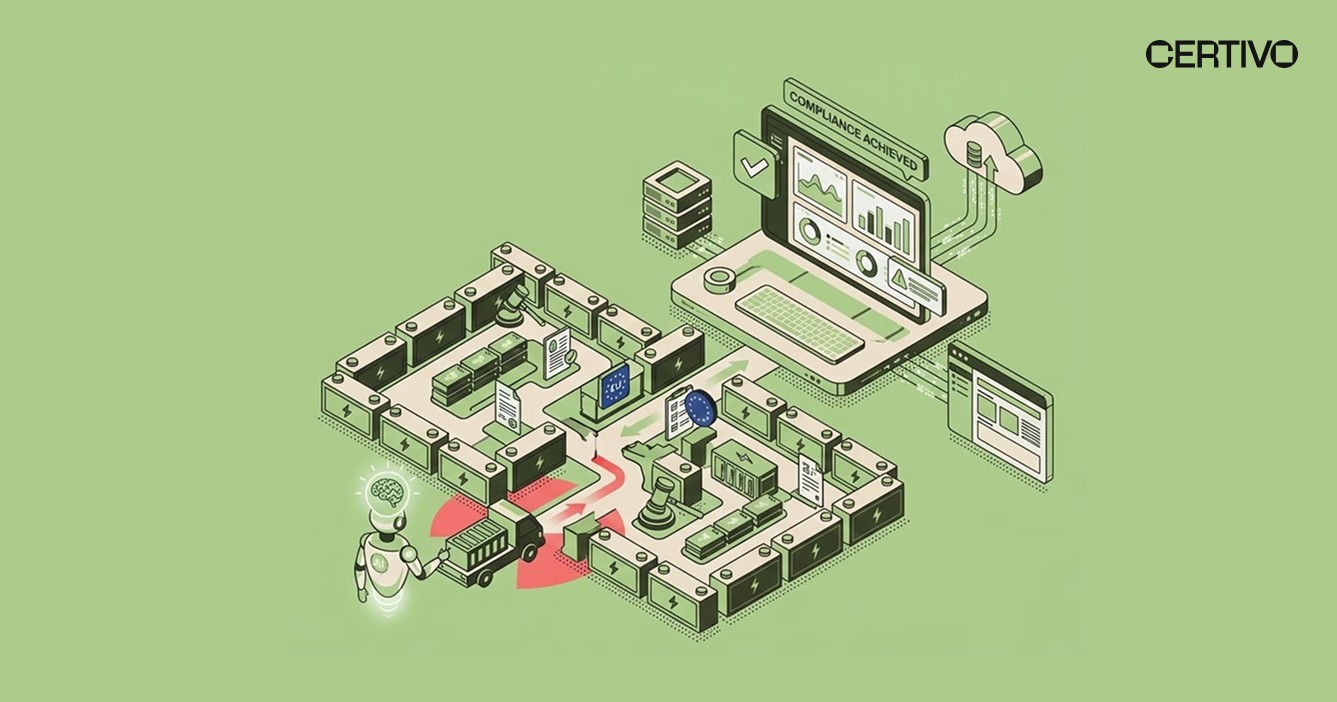
Battery Energy Storage Systems (BESS) have exploded onto the scene as the backbone of modern renewable energy grids. From stabilizing local microgrids to powering utility-scale infrastructure, these systems are the linchpin of a net-zero future. However, for manufacturers and integrators, the path to deployment is paved with a dense, shifting layer of global regulations.
Energy Storage Systems (ESS) sit at the intersection of critical infrastructure, chemical safety, and environmental mandates. Navigating this landscape isn’t just about avoiding fines; it’s about market access. A single non-compliant component can ground a gigawatt-scale project.
This guide breaks down the critical pillars—US market access, EU sustainability mandates, and safety protocols—and explores how automation is the only viable strategy for staying ahead.
FERC Order 841: The Gateway to US Markets
In 2018, the Federal Energy Regulatory Commission (FERC) issued FERC Order 841 (US markets), a landmark ruling that fundamentally changed the economics of storage. Before this, storage resources were often forced into regulatory boxes designed for fossil fuel plants. Order 841 mandated that Regional Transmission Organizations (RTOs) remove these barriers, allowing electric storage resources to participate fully in capacity, energy, and ancillary services markets.
For manufacturers, this created a boom in demand but also a spike in technical scrutiny. To participate in these open markets, Battery Energy Storage Systems (BESS) must meet rigorous interconnection standards. The hardware must be certified to respond instantly to grid signals, a capability that regulators now validate before a single kilowatt-hour is traded.
While Order 841 opened the door for revenue, it also raised the bar for hardware compliance. Developers now require documented proof that their systems can handle the aggressive cycling demanded by wholesale markets without compromising safety or longevity.
The EU Battery Regulation: A New Global Standard
Across the Atlantic, the EU Battery Regulation has set the world’s strictest standard for battery sustainability. Replacing the old directives, this regulation treats batteries as trackable assets with a "digital passport." By 2027, every industrial battery and BESS over 2 kWh must carry a digital record of its carbon footprint, recycled content, and material sourcing.
This regulation fundamentally reshapes supply chains. Manufacturers can no longer just assemble cells; they must verify the provenance of every gram of cobalt and lithium. The regulation enforces due diligence on raw materials, aligning with broader conflict mineral rules.
For the Energy Storage Battery industry, this means that compliance data is now as valuable as the battery itself. Missing documentation on a sub-supplier’s cathode material can block a shipment at the Rotterdam port. The regulation also imposes strict end-of-life requirements, mandating that producers finance the collection and recycling of their systems—a concept known as Extended Producer Responsibility (EPR).
Thermal Runaway Safety Standards: The Non-Negotiable
Safety remains the single biggest regulatory hurdle for Energy Storage Systems (ESS). High-profile fires have driven regulators to tighten thermal runaway safety standards globally. In the United States, NFPA 855 has become the bible for installation safety, dictating everything from spacing between units to explosion control venting.
Manufacturers must prove their systems can contain a fire without it propagating to neighboring units. This is often validated through the rigorous UL 9540A test method. A "large-scale fire test" failure can render a product uninsurable and unsellable.
These safety standards are dynamic. As chemistry evolves, so do the testing protocols. Keeping a product portfolio compliant requires constant vigilance of updating standards from bodies like the NFPA, ICC, and local fire marshals who often enforce stricter amendments than the national codes.
UL 1741 Certification and Grid Interconnection
For a BESS to connect to the grid, it must speak the grid’s language safely. This is where UL 1741 certification comes into play. It is the standard for smart inverters, ensuring they can disconnect during power outages (anti-islanding) and, conversely, stay connected during minor disturbances (voltage ride-through) to support grid stability.
With the rise of ancillary services energy storage—where batteries provide millisecond-level frequency regulation—the demands on inverters have increased. The latest iteration, UL 1741 SB, tests an inverter’s ability to interact smartly with the grid. Without this certification, a BESS is effectively a giant paperweight, legally barred from interconnection in most North American jurisdictions.
Material Compliance: RoHS Directive for Batteries
While high-level performance is crucial, compliance often trips up on the smallest components. The RoHS Directive for batteries and associated electronics restricts the use of hazardous substances like lead, cadmium, and mercury. While batteries themselves have specific exemptions, the Battery Management Systems (BMS), sensors, and cabling within a BESS must strictly adhere to RoHS limits.
A Battery Energy Storage Systems (BESS) unit contains thousands of components. If a single sensor from a tier-3 supplier contains banned phthalates, the entire system is non-compliant. Managing this "Bill of Materials" (BOM) compliance is a massive data challenge, requiring declarations from hundreds of global suppliers.
The Role of Energy Storage Obligation (ESO)
To drive adoption, governments are moving from permission to mandate. The Energy Storage Obligation (ESO) is emerging as a policy tool where utilities are legally required to procure a set amount of storage capacity.
States like California and New York pioneered this, but it is spreading globally. An Energy Storage Obligation (ESO) forces utilities to integrate storage into their long-term planning, creating a guaranteed market for compliant, certified systems. For manufacturers, these obligations signal where to prioritize certifications. If a region passes an ESO, local certification requirements (like specific fire codes or grid codes) immediately become top priority.
How Certivo Empowers Compliance in the Energy Storage Industry
In an industry governed by thousands of evolving rules, manual tracking is impossible. This is where Certivo changes the game.
Certivo is an AI-powered compliance management platform specifically built to handle the complex "system-of-systems" nature of the energy storage industry.
1. Automated "Cert Hunting" with CORA
Certivo’s proprietary AI agent, CORA, automates the most tedious part of compliance: chasing suppliers for documents. For a BESS manufacturer, collecting UL certifications, RoHS declarations, and UN 38.3 transport reports for thousands of parts is a full-time job. CORA proactively contacts suppliers, validates the received documents against current regulations, and flags expired certificates before they become a bottleneck.
2. Deep BOM Analysis
Certivo doesn’t just store PDF certificates; it understands your product. By ingesting your Bill of Materials (BOM), Certivo maps every single component to relevant regulations. If the EU Battery Regulation updates its list of restricted substances, Certivo instantly highlights which part of your BESS is affected. This granular visibility is critical for managing the complex hierarchy of battery cells, modules, racks, and containers.
3. Real-Time Regulatory Monitoring
Regulations like FERC Order 841 (US markets) and local fire codes are in constant flux. Certivo provides real-time monitoring of regulatory changes across global markets. Instead of relying on annual audits, compliance teams get actionable insights the moment a standard is revised, allowing them to pivot engineering or supply chain strategies immediately.
4. Supply Chain Transparency & Risk Management
With mandates for ethical sourcing, Certivo helps manufacturers map their supply chain risks. Whether it's tracking conflict minerals or ensuring UL 1741 certification across multiple inverter suppliers, the platform provides a centralized "single source of truth." This transparency is essential for the digital battery passports required by the EU, allowing Certivo clients to generate compliance reports with a single click.
By digitizing and automating the compliance lifecycle, Certivo allows engineers to focus on building better batteries, not chasing paperwork. In a world where Energy Storage Systems (ESS) are the new power plants, Certivo ensures they are built on a foundation of verified, unshakeable trust. Book a demo today to experience what smooth compliance management feels like.
Conclusion
As the global transition to renewable energy accelerates, the regulatory landscape for the Energy Storage Battery industry will only become more intricate. From the market-opening potential of FERC Order 841 (US markets) to the strict sustainability mandates of the EU Battery Regulation, staying compliant is no longer a static, one-time achievement—it is a continuous operational requirement.
Success in this new era requires a shift in mindset. Manufacturers and developers must view regulatory adherence not as a barrier, but as a gateway to trusted, scalable deployment. Whether it is meeting thermal runaway safety standards to satisfy insurers or securing UL 1741 certification for grid access, every compliance milestone is a step toward bankability.
This is where Certivo proves indispensable. By leveraging AI-driven automation to manage supply chain data and regulatory changes, Certivo transforms compliance from a liability into a competitive asset.
Lavanya
Lavanya is an accomplished Product Compliance Engineer with over four years of expertise in global environmental and regulatory frameworks, including REACH, RoHS, Proposition 65, POPs, TSCA, PFAS, CMRT, FMD, and IMDS. A graduate in Chemical Engineering from the KLE Institute, she combines strong technical knowledge with practical compliance management skills across diverse and complex product portfolios.
She has extensive experience in product compliance engineering, ensuring that materials, components, and finished goods consistently meet evolving international regulatory requirements. Her expertise spans BOM analysis, material risk assessments, supplier declaration management, and test report validation to guarantee conformity. Lavanya also plays a key role in design-for-compliance initiatives, guiding engineering teams on regulatory considerations early in the product lifecycle to reduce risks and streamline market access.
Her contributions further extend to compliance documentation, certification readiness, and preparation of customer deliverables, ensuring transparency and accuracy for global stakeholders. She is adept at leveraging compliance tools and databases to efficiently track regulatory changes and implement proactive risk mitigation strategies.
Recognized for her attention to detail, regulatory foresight, and collaborative approach, Lavanya contributes significantly to maintaining product compliance, safeguarding brand integrity, and advancing sustainability goals within dynamic, globally integrated manufacturing environments.