

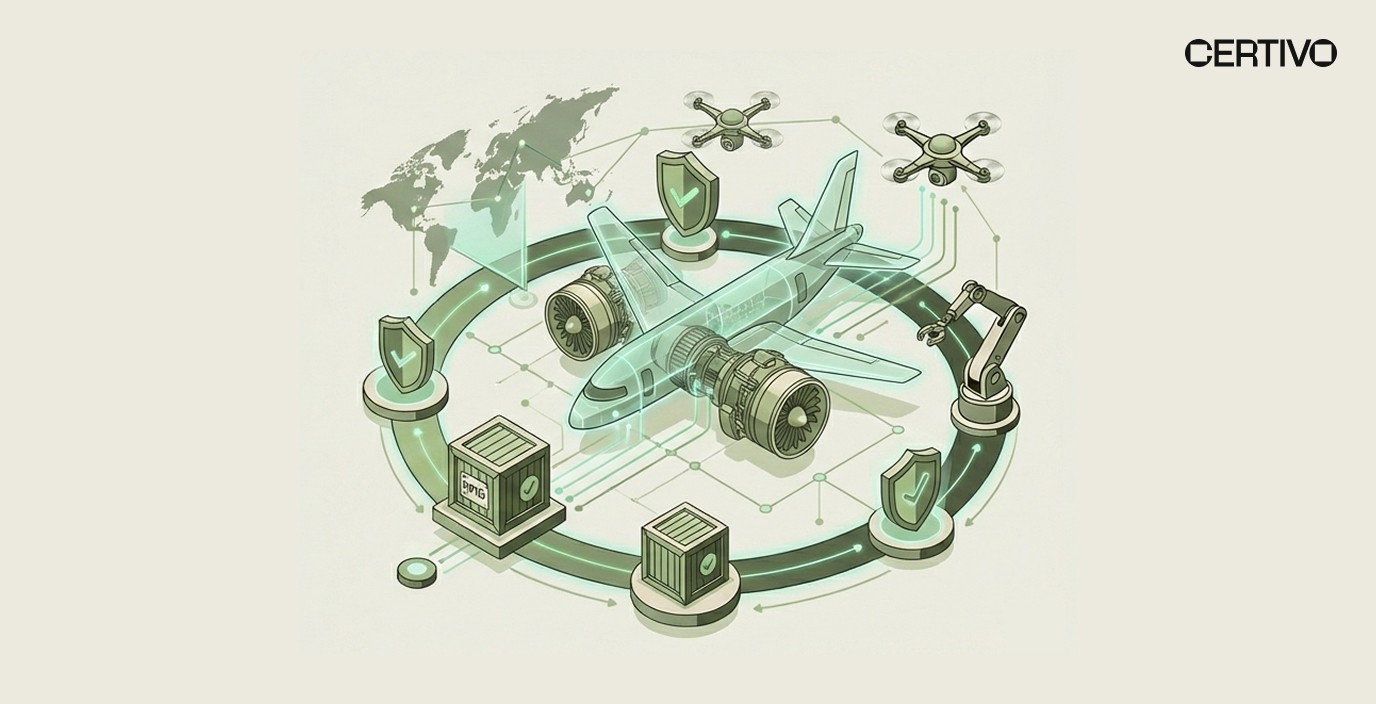
In the high-risk, high-value world of aerospace and defence (A&D), regulatory compliance is not just a legal formality—it’s a strategic priority. From export restrictions to cybersecurity mandates, companies operating in this sector must comply with a complex web of international and domestic regulations. For organisations involved in manufacturing, R&D, or software development related to aircraft, spacecraft, defence systems, or dual-use technology, aerospace defence compliance is an essential operational pillar.
Failing to comply with export control laws or cybersecurity requirements can result in revoked contracts, substantial penalties, and reputational damage. Therefore, streamlining compliance with best practices and modern tools—especially across the supply chain—is critical.
This blog examines how aerospace and defence companies can establish robust compliance programs, with a focus on export compliance, aerospace, dual-use export regulations, ITAR and DFARS requirements, supply chain cybersecurity in the aerospace and defence sector, and the CMMC landscape for aerospace contractors. You’ll also learn how Certivo helps businesses stay ahead with its AI-powered compliance platform tailored to the evolving demands of the A&D industry.
The Growing Complexity of Aerospace Defence Compliance
The defence industry is governed by some of the most stringent regulations in the world. Companies must navigate:
ITAR (International Traffic in Arms Regulations)
EAR (Export Administration Regulations)
DFARS (Defence Federal Acquisition Regulation Supplement)
CMMC (Cybersecurity Maturity Model Certification)
Dual-use export regulations
Foreign Military Sales (FMS) guidelines
National and international sanctions regimes
All these frameworks fall under the broader scope of aerospace defence compliance, requiring careful attention to data sharing, parts sourcing, technical documentation, and supplier onboarding.
As the A&D industry continues to globalise, companies face increased scrutiny over export compliance and aerospace processes. Additionally, defence agencies and contractors now demand tighter oversight of digital assets and supply chains, especially with heightened geopolitical risks and cyber threats.
Best Practices for Export Compliance in Aerospace
Ensuring export compliance in aerospace requires a robust internal controls program. Here are the key best practices to follow:
1. Classify Products Accurately
Begin by determining whether your products, software, or technology fall under the jurisdiction of ITAR or EAR. Proper classification determines licensing needs and reporting requirements. Misclassifications can lead to violations of dual-use export regulations.
2. Train Your Staff Regularly
Anyone handling export-controlled data or products—from engineers to customer service—must be trained on export laws. Continuous training reduces the risk of unintentional compliance breaches.
3. Implement Technology Control Plans (TCPs)
To prevent unauthorised access to controlled data, use TCPs with access restrictions, encryption, and secure file-sharing protocols, especially when working with foreign nationals.
4. Track Export Licenses in Real-Time
Maintain a central repository for export licenses, ensuring deadlines and conditions are met. Integrating this with your aerospace defence compliance system helps automate alerts and reporting.
Addressing Dual-Use Export Regulations
Dual-use export regulations apply to items and technology that have both civilian and military applications. Managing these regulations is a unique challenge for aerospace manufacturers working on engines, navigation systems, or software.
Best practice: Use AI tools that continuously monitor regulatory updates and match parts, components, and IP against evolving lists of dual-use goods. Certivo’s AI algorithms assist in risk scoring and licensing path recommendations—automating what was once a manual, error-prone process.
Supply Chain Cybersecurity in A&D: Why It Matters
A&D companies often manage multi-tier supply chains with dozens—if not hundreds—of subcontractors. Many of these smaller suppliers lack robust cybersecurity protocols, making them vulnerable targets. A single supplier breach could compromise the entire project.
That’s why supply chain cybersecurity A&D is now a core pillar of aerospace defence compliance.
Top Strategies Include:
Conduct regular risk assessments across Tier 1 and Tier 2 suppliers.
Enforce security standards outlined in DFARS and NIST SP 800-171.
Require suppliers to achieve CMMC certification for aerospace contractors.
CMMC is quickly becoming a mandatory baseline, particularly for organisations working with the U.S. Department of Defence (DoD). Failure to comply can result in loss of contract eligibility.
Navigating ITAR and DFARS Requirements
ITAR DFARS requirements dictate how controlled technical data and physical goods are stored, shared, and transported. Key obligations include:
Restricted access to ITAR-controlled technical data to U.S. persons only.
DFARS-compliant cybersecurity frameworks for contractors and subcontractors.
Strict licensing and end-use documentation requirements for exports.
Violating these requirements, even unintentionally, can lead to multi-million-dollar fines or bans from government contracts.
Best practice: Implement role-based access controls, secure cloud environments, and encryption standards. Platforms like Certivo can integrate these controls into a compliance dashboard with audit-ready documentation.
What is CMMC and Why Does It Matter?
CMMC aerospace contractors are expected to meet five levels of cybersecurity maturity. CMMC ensures that defence contractors can protect Controlled Unclassified Information (CUI) and demonstrate cybersecurity hygiene across their operations.
All DoD suppliers—whether prime contractors or subcontractors—must achieve CMMC certification to bid on contracts. While CMMC Level 1 focuses on basic safeguarding, Levels 3-5 require rigorous cybersecurity frameworks, extensive documentation, and threat response capabilities.
Certivo offers CMMC readiness assessments and automation features that support compliance with both CMMC and ITAR DFARS requirements, eliminating guesswork and manual tracking.
Leveraging Certivo: AI-Powered Compliance for A&D
Certivo is an AI-powered compliance management platform built to help aerospace and defence companies navigate export control laws, cybersecurity mandates, and supply chain risk.
Key Features for Aerospace Defence Compliance:
Automated Risk Identification
Certivo’s AI tools continuously scan product data and supplier declarations for red flags across export compliance, aerospace, and dual-use export regulations.
Centralised Documentation
Store ITAR licenses, DFARS clauses, and CMMC aerospace contractors certifications in one secure place, accessible to authorised team members with complete version control.
Supply Chain Risk Dashboard
Monitor vendor risk scores, supply chain cybersecurity A&D status, and compliance history in real time to avoid last-minute surprises.
Regulatory Update Engine
Certivo auto-updates the system with the latest in defence compliance best practices, ITAR revisions, EAR lists, and CMMC framework changes.
Audit-Ready Reporting
Easily generate detailed reports for internal audits, external inspections, or government submissions—saving time and reducing stress.
Defence Compliance Best Practices
To stay competitive and contract-ready in the aerospace and defence landscape, companies must adopt these ongoing defence compliance best practices:
Integrate export and cybersecurity compliance into product lifecycle management
Vet suppliers for ITAR/CMMC readiness
Automate manual compliance workflows using AI
Prioritise end-to-end visibility from BOMs to final delivery.
Align compliance with ESG and national security requirements.
By embedding compliance into digital transformation initiatives, organisations not only meet regulations but also gain operational resilience, cost savings, and a stronger market position.
Final Thoughts
In the aerospace and defence industry, compliance is more than a legal mandate—it’s a strategic differentiator. With regulations like ITAR, DFARS, CMMC, and dual-use export regulations evolving rapidly, the risk of non-compliance is greater than ever. Manual systems simply can't keep up.
That’s why leaders across the industry are turning to platforms like Certivo. From export compliance aerospace to supply chain cybersecurity A&D, Certivo simplifies the entire compliance lifecycle with AI-powered automation, real-time risk monitoring, and intelligent documentation management.
Ready to Transform Your A&D Compliance Strategy?
Visit Certivo.com to learn how we help aerospace and defence companies streamline compliance, secure their supply chains, and win more contracts in a complex regulatory world.
Book Now | Stay ahead with Certvo| Get your free trial
Vasanth
Vasanth is a skilled Compliance Engineer with over five years of experience specializing in global environmental regulations, including REACH, RoHS, Proposition 65, POPs, TSCA, PFAS, CMRT, EMRT, FMD, and IMDS. With a strong academic foundation in Chemical Engineering from Anna University, he brings a deep technical understanding to compliance processes across complex product lines.
Vasanth excels in analyzing Bills of Materials (BOMs), evaluating supplier declarations, and ensuring regulatory conformity through meticulous review and risk assessment. He is highly proficient in supplier engagement, adept at interpreting material disclosures, and experienced in preparing customer-ready compliance documentation tailored to diverse global standards.
Known for his attention to detail, up-to-date regulatory knowledge, and proactive communication style, Vasanth plays a critical role in maintaining product compliance and advancing sustainability goals within fast-paced, globally integrated manufacturing environments.