

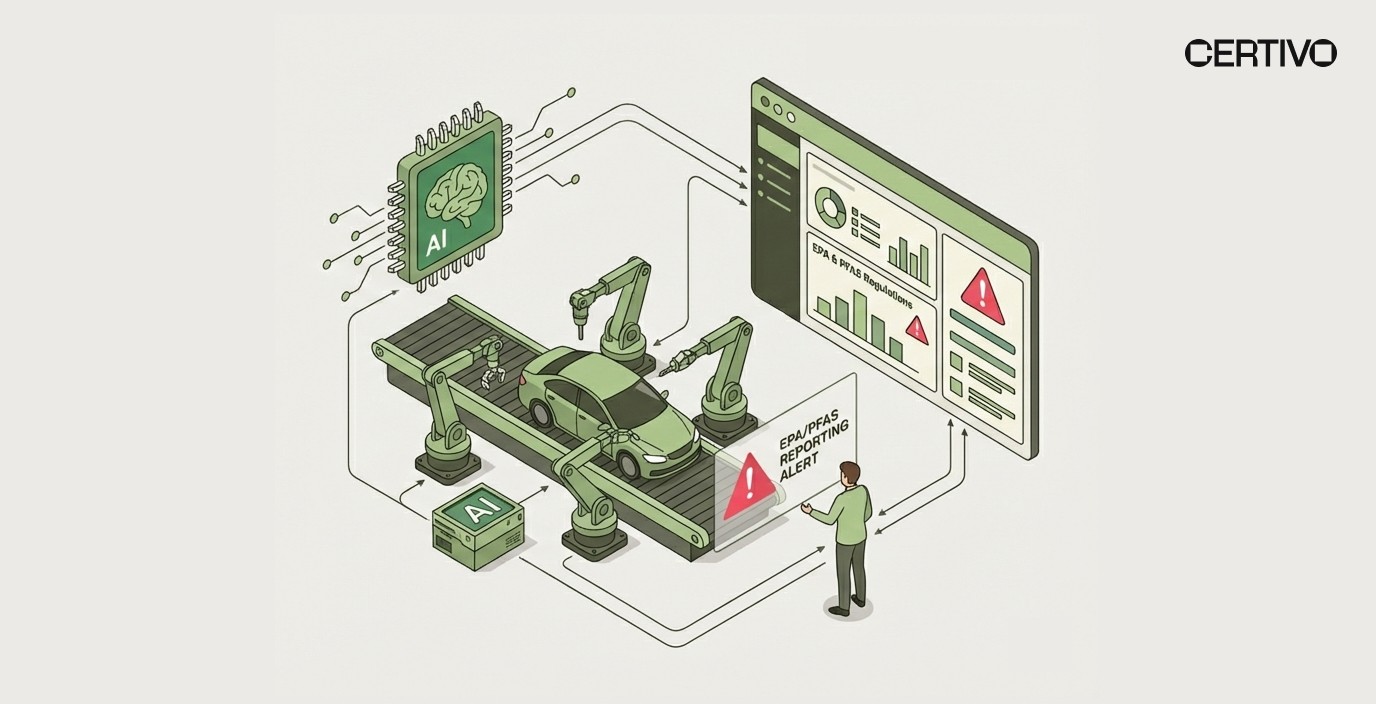
The automotive industry regulatory landscape operates within one of the most heavily regulated sectors globally. From emissions standards to chemical restrictions, material sourcing requirements to digital product passports, manufacturers and suppliers face an increasingly complex web of overlapping regulations across multiple jurisdictions. What distinguishes successful automotive operations today is not merely compliance, but proactive, integrated compliance management that anticipates regulatory shifts before they disrupt supply chains or delay product launches.
This foundational guide addresses the primary regulatory frameworks that automotive manufacturers and suppliers navigate daily, exploring the foundational requirements, compliance mechanisms, and operational implications for product development and supply chain management.
I. Chemical and Substance Compliance: REACH and RoHS in the Automotive Industry Regulatory Landscape
REACH: The Foundation of Chemical Regulation
The EU's Registration, Evaluation, Authorisation and Restriction of Chemicals (REACH) Regulation stands as the most comprehensive chemical regulatory framework affecting automotive manufacturers globally. Implemented in 2007 and continuously updated, REACH applies mandatorily to any company—regardless of location—that manufactures vehicles in the EEA or supplies components into EEA markets.
REACH imposes distinct obligations based on the supply chain role. Vehicle manufacturers and Tier 1 suppliers function as downstream users and article importers, creating multiple simultaneous compliance pathways:
Registration of Substances: Any substance manufactured, imported, or intentionally released from articles exceeding 1 tonne per year must be registered with the European Chemicals Agency. While suppliers bear primary registration responsibility, OEMs must verify that their use cases are covered in upstream registrations. For downstream users, this means maintaining transparent communication with suppliers about identified uses—a process often complicated by rapid design iterations and platform variants across product portfolios.
Notification and Communication of SVHCs: Substances on the REACH Candidate List present in articles above 0.1% weight/weight trigger multiple obligations. Producers and importers handling >1 tonne/year must notify ECHA; all downstream handlers must communicate SVHC presence to customers. The Candidate List grows continuously, currently including PFAS chemicals disrupting automotive supply chains. This creates an ongoing compliance obligation rather than a fixed requirement. A single new SVHC addition can render compliant designs non-compliant overnight without proper monitoring systems.
Authorization for Restricted Uses: When SVHC substances transition from the Candidate List to REACH Annex XIV (Authorization List), manufacturers face sunset dates after which the substance cannot be used without authorization. For automotive suppliers, this often necessitates component redesign or alternative material sourcing within compressed timelines.
The Practical Reality: A modern vehicle contains 30,000+ components sourced from dozens of Tier 2 Tier 3 supplier transparency challenges that demand new operational approaches. BOM complexity in automotive extends beyond simple parts lists—it encompasses material declarations, regulatory compliance verification, and supplier communication across multiple languages and regions. Manual tracking across such complex bills of materials becomes operationally unworkable. The complexity compounds when suppliers themselves have suppliers—creating visibility gaps where non-compliance can hide until discovered during audits or customer escalations. Tier 2 Tier 3 supplier transparency isn't just a nice-to-have; it's increasingly a contractual requirement from major OEMs. This operational bottleneck directly impacts launch schedules: missing a single declaration can fail PPAP submissions, delay production starts, and erode OEM trust.
RoHS and Material-Specific Restrictions
The Restriction of Hazardous Substances (RoHS) Directive complements REACH by imposing maximum concentration limits on specific hazardous substances in electrical and electronic components. Automotive electrical systems—particularly in electric vehicles with sophisticated power electronics—fall directly within scope.
RoHS restricts lead, cadmium, mercury, hexavalent chromium, and specified phthalates to defined maximum concentrations. Unlike REACH's comprehensive chemical approach, RoHS targets a defined substance list in defined applications, making compliance more straightforward but still requiring rigorous supplier verification and documentation proving conformity. FMD collection challenges—gathering Full Material Disclosures from suppliers—represent a critical bottleneck in RoHS compliance, particularly when SDS management in automotive systems remain fragmented across multiple supplier databases and formats.
II. Emissions Standards: From Euro 6 to Zero-Emission Mandates
The Euro Standard Evolution
European emissions standards have progressively tightened over decades, with Euro 6—the current standard—establishing stringent limits on nitrogen oxides, particulate matter, and carbon monoxide. As of 2021, Euro 6d standards narrowed particle detection from 23 nanometers to 10 nanometers, effectively capturing significantly smaller, more harmful particles.
The regulatory trajectory points decisively toward zero-emission mandates. Beginning January 1, 2025, new EU fleet-wide CO₂ targets require average emissions of 95 g CO₂/km for passenger cars and 147 g CO₂/km for vans. More consequentially, starting in 2035, the EU mandates zero CO₂ emissions for all new passenger cars and vans—a 100% reduction that effectively prohibits traditional combustion engines from the EU market.
Manufacturers exceeding 2025 targets face penalties of €95 per gram/km per vehicle, a calculation that rapidly accumulates across a fleet. A manufacturer 5 g/km over target across 500,000 annual registrations faces a €237.5 million penalty—a single year's non-compliance creates business-threatening financial exposure.
Compliance Mechanisms and Strategic Implications
The targets cannot be met through incremental efficiency improvements alone. The regulation incentivizes a 25% electric vehicle sales rate through super-credits rewarding zero and low-emission vehicles. Alternatively, manufacturers can form pooling agreements to combine emission targets, though such agreements must carefully navigate competition law requirements.
The strategic consequence is fundamental: manufacturers cannot launch vehicles for EU markets without addressing the embedded assumption that EV penetration will reach unprecedented levels within the regulatory window. Compliance for emissions extends beyond tailpipe standards to battery material sourcing, end-of-life recycling pathways, and centralized compliance platform strategies that coordinate EV component sourcing, chemical restrictions, and supplier verification across regions. AI-powered compliance software has become essential for tracking real-time changes to emissions regulations, ensuring compliance data is current and audit-ready.
III. Material Sourcing and the IMDS Ecosystem
International Material Data System Framework
The International Material Data System represents the automotive industry's infrastructure for managing chemical composition across 30,000+ vehicle components. Operated globally since 2001, IMDS requires suppliers to declare materials at a gram-level resolution—not just prohibited substances, but all substances—creating complete material transparency throughout the supply chain.
IMDS data serves dual regulatory purposes: compliance verification (ELV, REACH, RoHS) and end-of-life vehicle recycling logistics. OEMs compare IMDS declarations against regulatory lists (GADSL, REACH Candidate List, ELV restrictions) to flag non-compliant materials before production, enabling component redesign or supplier substitution.
Critically, integrated BOM management through systems that link IMDS data directly with production scheduling is contractually mandated under PPAP (Production Part Approval Process), integrating material compliance directly into quality systems. This linkage is intentional: regulatory and quality failures are operationally inseparable in automotive operations. SDS management in automotive operations increasingly requires centralized systems that can version-control Safety Data Sheets, track expiration dates, and alert teams to regulatory updates—a level of automation that manual processes simply cannot sustain.
Conflict Minerals Compliance: From Dodd-Frank to EU Regulation 2017/821
Automotive manufacturers face dual-regime conflict minerals compliance: U.S. SEC rules implementing Dodd-Frank and the EU's Conflict Minerals Regulation (2017/821), effective January 1, 2021.
Scope and Minerals: Four minerals—tin, tantalum, tungsten, and gold (3TG)—are designated conflict minerals due to mining in armed-conflict zones, particularly the Democratic Republic of Congo. These materials appear throughout automotive supply chains: tin in solder, tantalum in capacitors, tungsten in contacts and coatings, gold in plating and connectors.
Due Diligence Obligation: Rather than outright bans, both regimes mandate supply chain due diligence, demonstrating minerals were not sourced in conflict-affected regions or used to finance armed groups. This requires a cascading questionnaire framework flowing through Tier 1, Tier 2, and Tier 3 suppliers, with documented smelter and refiner sources. Non-compliance results in supplier disqualification, reputational damage (public reporting of conflict mineral percentages), and, in severe cases, product seizure.
IV. PFAS Restrictions: The "Forever Chemicals" Challenge
Per- and polyfluoroalkyl substances represent an emerging and rapidly accelerating compliance risk. These synthetic chemicals resist degradation, bioaccumulate in organisms, and persist indefinitely—earning the label "forever chemicals."
Current and Projected Regulatory Status
PFAS regulations are fragmenting globally but converging toward restriction:
EU/EEA: Specific PFAS compounds (C9-14 perfluorocarboxylic acids and related substances) have been restricted since February 2023. Undecafluorohexanoic acid (PFHxA) faces restrictions beginning April 2026. A broad PFAS restriction proposal under EU review could address multiple PFAS families simultaneously, representing an even more disruptive regulatory shift.
United States: The EPA's PFAS drinking water rule (finalized April 2024) sets maximum contaminant levels triggering industrial remediation obligations. The EPA's TSCA Section 8(a)(7) PFAS reporting rule requires manufacturers and importers to provide historical data dating back to 2011—covering automotive polymers, coatings, and electronics.
State-Level Fragmentation: Maine, California, and other states have implemented or proposed product-specific PFAS bans effective 2025-2026, creating regional restrictions for products distributed across multiple jurisdictions.
Automotive Applications and Supply Chain Complexity
PFAS compounds have been widely used in automotive manufacturing for legitimate technical purposes: fume suppressants in chrome plating, seals and gaskets (due to chemical resistance), wire insulation, thermal management systems, interior and exterior coatings, and refrigerants. Identifying where PFAS is used, concentrations, and viable alternatives requires visibility into Tier 2 and Tier 3 suppliers—precisely where transparency gaps typically exist in traditional compliance processes. FMD collection challenges become acute when suppliers must provide not just current PFAS declarations but also historical data spanning years of sourcing decisions. Compliance coverage tracking across global manufacturing networks ensures no product variant slips through without proper PFAS assessment.
V. Emerging Frameworks: Digital Product Passports and ESG Compliance
Digital Product Passports
The EU is mandating Digital Product Passports—digital records of product sustainability, material, and chemical data accessible throughout a product's lifecycle. Battery-related DPPs for electric vehicles are slated to go live first, requiring automotive suppliers to collect and structure material data meeting emerging passport standards.
This represents a shift from supplier-to-OEM confidentiality toward end-consumer-accessible transparency, fundamentally changing how material data is categorized, verified, and maintained throughout product lifecycles.
Corporate Sustainability Due Diligence and Human Rights Compliance
The EU Corporate Sustainability Due Diligence Directive and the Uyghur Forced Labor Prevention Act extend automotive compliance beyond chemistry into human rights and labor practices. Automotive detentions at U.S. borders due to forced labor violations increased by 1,580% between 2023 and 2024, with automotive manufacturers as a particular focus area. OEMs must cascade human rights due diligence requirements through Tier 1 and Tier 2 suppliers—adding another data-collection dimension to supply chain management.
VI. The Competitive Advantage: Integration and Continuous Compliance
Automotive industry regulatory landscape compliance doesn't live in neat boxes anymore. It behaves more like a living system—one that keeps shifting under your feet. Miss a PFAS disclosure. File a REACH update late. Trust a conflict-minerals smelter that never got properly verified. One small gap is all it takes. Suddenly production slows, audits start failing, OEM programs get pulled, regulators take notice. The damage rarely stays contained.
PPAP delays in automotive supply chains illustrate this problem perfectly. A missing material declaration. An unverified supplier SDS. A certification that expired without notice. Each triggers a cascade: design holds, qualification delays, production start postponements, and ultimately, revenue loss. These aren't hypothetical scenarios—they're operating realities for teams still managing compliance through spreadsheets and manual processes.
This is exactly why spreadsheets and aging compliance tools are breaking down. They were built for a simpler era. Today's requirements move and change too fast for manual work to keep up. BOM complexity in automotive demands intelligent systems that can track tens of thousands of components, their material composition, regulatory status, and supplier certification status in real time. Compliance coverage tracking must span multiple regulatory frameworks simultaneously—REACH, RoHS, PFAS, conflict minerals, emissions standards—without gaps or inconsistencies that create audit risk.
AI-powered compliance monitoring represents a fundamental shift in how organizations manage this complexity. Rather than reactive manual checks, teams now have continuous visibility into regulatory changes, supplier compliance status, certification expirations, and emerging risks. Centralized compliance platform architectures consolidate data that previously lived scattered across supplier portals, email inboxes, shared drives, and legacy systems—creating a single source of truth for compliance status.
Integrated BOM management that connects parts data, supplier information, material composition, regulatory lists, and certification status in one system eliminates the fragmentation that creates compliance blind spots. When a PFAS restriction changes, the system immediately flags all components using restricted materials, notifies relevant suppliers, initiates redesign workflows, and tracks remediation progress through to completion.
Teams that switch to automated compliance platforms aren't just shaving off a little time, they are experiencing the kind of efficiency that reshapes their entire business model. Suppliers respond 90% of the time within 5 days—not 5 weeks. Design changes deploy in hours, not months. Audits completed on schedule instead of slipping. Programs stay on track. Trust with OEMs deepens.
The competitive advantage isn't coming from working harder anymore. It's coming from working smarter—from BOM complexity in automotive becoming a managed system rather than a crisis point, from PPAP delays in automotive becoming the exception rather than the rule, and from regulatory compliance transforming from a cost center into a strategic differentiator that wins new OEM programs and secures existing partnerships.
Key Takeaways
The automotive industry regulatory landscape is no longer a series of discrete obligations but a continuously evolving ecosystem where integration, visibility, and speed determine competitive position. Organizations that invest in automated, centralized compliance management—that prioritize compliance coverage tracking, integrated BOM management, and AI-powered compliance monitoring—are the ones building resilience into their supply chains and winning market share in an increasingly regulated industry.
Hariprasanth
Hariprasanth is a Chemical Compliance Specialist with nearly four years of experience, underpinned by a degree in Chemical Engineering. He brings in-depth expertise in global product compliance, working across key regulations such as REACH, RoHS, TSCA, Proposition 65, POPs, FMD, and PFCMRT.
Hariprasanth specializes in reviewing technical documentation, validating supplier inputs, and ensuring that products consistently meet regulatory standards. He works closely with cross-functional teams and suppliers to collect accurate material data and deliver clear, audit-ready compliance reports that stand up to scrutiny.
Through his strong analytical skills and regulatory insight, Hariprasanth enables organizations to navigate evolving compliance challenges while aligning with sustainability initiatives in an increasingly dynamic regulatory environment.