


The European Chemicals Agency has expanded the SVHC Candidate List to 253 substances, adding n-hexane and Bisphenol AF on February 4, 2026. This regulatory update creates immediate REACH SVHC Candidate List compliance obligations for manufacturers, importers, and suppliers across multiple industry sectors. Organizations handling adhesives, coatings, cosmetics, automotive fluids, or high-performance polymers must now implement communication, notification, and safe-use documentation requirements for these newly listed substances.
The addition triggers legal obligations that take effect immediately upon publication. Companies without robust regulatory horizon scanning intelligence capabilities risk compliance gaps that may result in market access restrictions, customer relationship damage, and regulatory enforcement actions. Understanding these requirements enables strategic preparation rather than reactive scrambling as enforcement intensifies throughout 2026.
Table of Contents
Understanding the February 2026 SVHC Candidate List Update
Chemicals Added: N-Hexane and Bisphenol AF
Immediate Legal Obligations for Companies
Industries Facing Direct Compliance Impact
Supply Chain Communication Requirements
Compliance Risks and Enforcement Consequences
Strategic Preparation for SVHC Compliance
How AI Transforms REACH SVHC Management
Understanding the February 2026 SVHC Candidate List Update
The ECHA Candidate List of substances of very high concern serves as the regulatory foundation for identifying chemicals that pose serious risks to human health or the environment. Substances added to this list trigger immediate compliance obligations under REACH regulation, regardless of whether they proceed to authorization requirements.
On February 4, 2026, ECHA officially expanded this list by adding two hazardous chemicals, bringing the total to 253 entries. This update reflects ongoing European regulatory efforts to identify and control substances with properties warranting particular concern. The ECHA news announcement provides official documentation of this regulatory action.
REACH SVHC Candidate List compliance requires understanding that listing triggers obligations independent of future authorization decisions. Companies must immediately assess product portfolios, evaluate supply chain exposure, and implement communication requirements. Organizations relying on manual tracking face significant challenges managing these obligations across potentially thousands of products and supplier relationships.
The Candidate List functions as an early warning system for substances that may face stricter controls. However, the listing itself creates binding legal requirements that compliance and regulation managers must address promptly. Delayed response creates cumulative compliance debt that becomes increasingly difficult to remediate.

Chemicals Added: N-Hexane and Bisphenol AF
The February 2026 update adds two substances with distinct hazard profiles and industrial applications. Understanding the specific characteristics and uses of each chemical enables targeted compliance responses.
Chemicals Affected Summary Table
Chemical Name | EC Number | CAS Number | Reason for Inclusion |
|---|---|---|---|
n-hexane | 203-777-6 | 110-54-3 | Specific target organ toxicity after repeated exposure (Neurotoxicity) |
4,4'-[2,2,2-trifluoro-1-(trifluoromethyl)ethylidene]diphenol and its salts (Bisphenol AF) | 216-036-7 | 1478-61-1 | Toxic for reproduction |
N-Hexane: Neurotoxicity Concerns
N-hexane receives SVHC designation due to specific target organ toxicity after repeated exposure, specifically neurotoxicity. This solvent finds extensive use across multiple industrial applications where its chemical properties provide functional value.
Common n-hexane applications include:
Extraction solvent in food processing
Cleaning agent in electronics manufacturing
Component in adhesives and rubber cements
Degreasing agent in metal fabrication
Laboratory solvent for chemical analysis
N-hexane SVHC compliance affects organizations across diverse sectors. The neurotoxicity classification reflects documented health effects from occupational exposure, driving regulatory concern about worker safety and environmental release. AI tools for compliance management help organizations identify where n-hexane appears across product formulations and manufacturing processes.
Bisphenol AF: Reproductive Toxicity
Bisphenol AF and its salts receive SVHC designation due to reproductive toxicity. This fluorinated bisphenol compound serves as a monomer for high-performance polymers and a cross-linking agent in specialized applications.
Common Bisphenol AF applications include:
Monomer for polyamides and polyesters
Cross-linking agent for fluoroelastomers
Component in high-temperature resistant materials
Specialty chemical intermediate
Bisphenol AF regulatory obligations affect chemical manufacturers and downstream users requiring high-performance polymer characteristics. The reproductive toxicity classification places this substance among chemicals facing particular regulatory scrutiny within the broader bisphenol category.
Immediate Legal Obligations for Companies
REACH SVHC Candidate List compliance triggers three primary obligation categories that take effect immediately upon substance listing. Organizations must understand and implement these requirements without waiting for additional regulatory guidance.
Communication Obligations
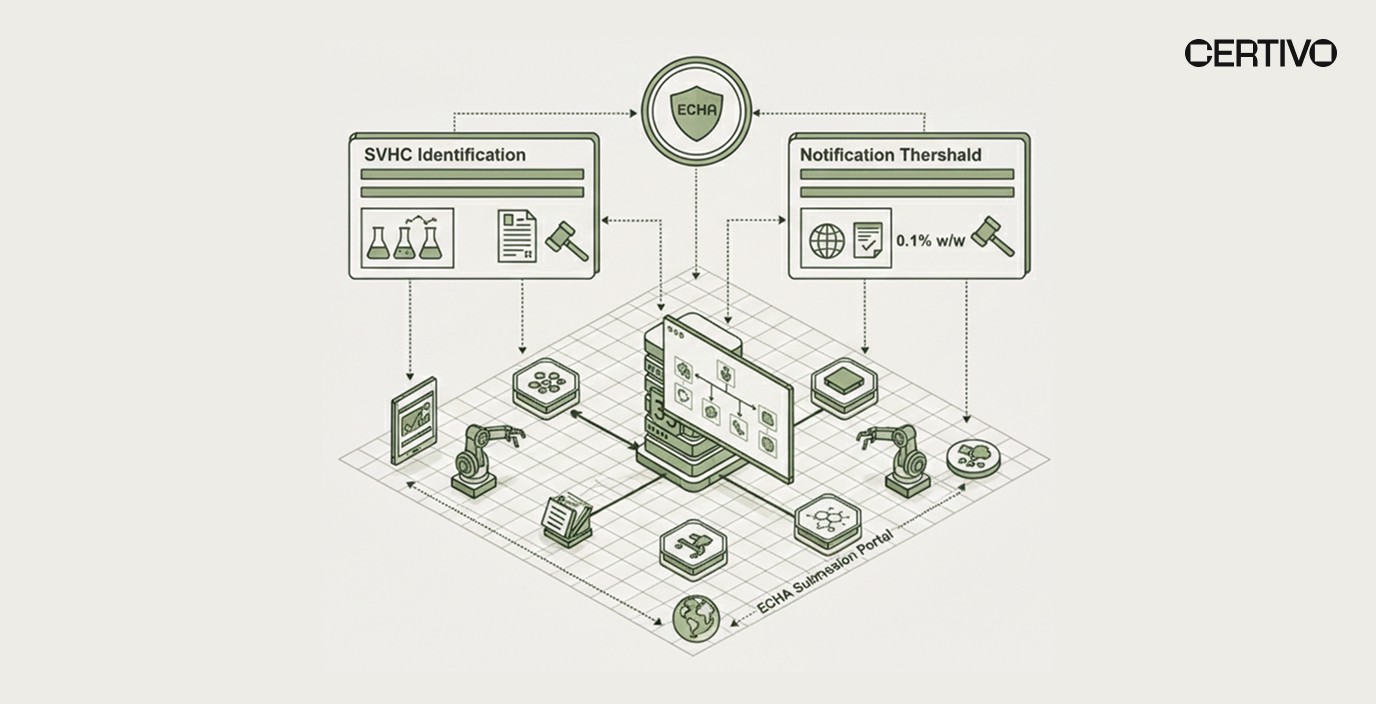
Suppliers of articles containing SVHC substances above 0.1% weight concentration must communicate information to recipients enabling safe use. This obligation extends throughout supply chains, requiring multi-tier supply chain transparency that many organizations struggle to achieve with manual processes.
Communication requirements include:
Identification of SVHC substance present
Information enabling safe use of the article
Response to consumer requests within 45 days
Proactive communication to professional customers
Notification Obligations
Producers and importers of articles must notify ECHA when SVHC substances are present above threshold concentrations and total quantities exceed one tonne annually. SVHC notification requirements ECHA has established create documentation burdens that automated regulatory monitoring REACH platforms can systematically address.
Notification triggers include:
SVHC concentration above 0.1% weight in article
Total SVHC quantity exceeds one tonne per producer/importer annually
Substance not already registered for that use
Safe Use Documentation
Companies must provide information on safe handling, use, and disposal of products containing SVHC substances. This documentation supports occupational health protection and environmental release minimization. Continuous audit-ready documentation systems ensure organizations maintain required records accessible for regulatory inspection.
Industries Facing Direct Compliance Impact
The February 2026 SVHC additions create varying compliance obligations across industries based on chemical usage patterns and product portfolios. Executive leadership should evaluate organizational exposure within the following sector categories.
Manufacturing and Industrial Sector
Manufacturing operations face significant REACH SVHC Candidate List compliance obligations given n-hexane and Bisphenol AF applications across adhesives, sealants, coatings, and polymer processing. Production facilities using these substances in formulations must evaluate concentration thresholds and implement appropriate communication protocols.
Building future-ready compliance infrastructure enables manufacturing organizations to track SVHC presence across complex production processes and multiple product lines.
Consumer Products Sector
Cosmetics, perfumes, fragrances, polishes, and wax blends may contain n-hexane as a processing solvent or ingredient carrier. Consumer product manufacturers face particular scrutiny given direct consumer exposure pathways. Substance of very high concern reporting obligations require product-level assessments that identify SVHC presence throughout formulations.
Global cosmetics industry regulatory shifts continue expanding substance restrictions affecting personal care product manufacturers.
Automotive and Machinery Sector
Antifreeze products, lubricants, and machinery maintenance chemicals represent potential exposure points for both newly listed substances. Automotive supply chains extend across multiple tiers, creating supply chain SVHC communication challenges that manual tracking cannot reliably address.
The automotive industry compliance framework must incorporate SVHC requirements alongside existing regulatory obligations for safety, emissions, and environmental performance.
Chemical Industry Sector
Chemical manufacturers face the most direct Bisphenol AF regulatory obligations given its role as a monomer for high-performance polymers and fluoroelastomer cross-linking agent. Organizations producing or processing these substances must implement immediate compliance measures while evaluating longer-term reformulation strategies.
Procurement and supply chain leaders should assess supplier capabilities for providing SVHC-free alternatives where technically feasible.
Supply Chain Communication Requirements
REACH SVHC Candidate List compliance extends throughout supply chains, creating communication obligations that flow from raw material suppliers through manufacturers to end consumers. Organizations must establish systematic approaches to managing these information flows.
Upstream Communication
Manufacturers must obtain SVHC information from suppliers to assess product compliance status. This requirement creates data collection challenges across multi-tier supply chains where visibility diminishes at each tier. Streamlined supplier documentation processes enable systematic data collection without overwhelming supplier relationships.
Certivo's platform incorporates CORA, an intelligent assistant that automates supplier follow-ups and data completion workflows. Rather than manual email chasing, CORA systematically engages suppliers to collect required SVHC declarations, reducing administrative burden while improving data completeness and supporting chemical compliance automation EU requirements.
Downstream Communication
Suppliers must proactively communicate SVHC presence to professional customers and respond to consumer requests within 45 days. These obligations require accessible documentation systems that can generate required information efficiently upon request.
Supply Chain Transparency Challenges
Multi-tier supply chain transparency remains challenging for organizations relying on spreadsheets and manual tracking. SVHC information must flow accurately through complex networks involving multiple suppliers, manufacturing locations, and distribution channels. AI compliance software chemicals platforms address this complexity through automated data collection and verification.

Compliance Risks and Enforcement Consequences
Non-compliance with REACH SVHC requirements carries significant enforcement consequences that organizations must understand when evaluating compliance investment priorities. EU member states enforce REACH requirements through national competent authorities with substantial enforcement powers.
Regulatory Penalties
Member state enforcement includes authority to impose financial penalties for REACH violations. Penalty amounts vary by jurisdiction and violation severity but can reach levels that materially affect organizational financial performance. Repeated violations trigger enhanced scrutiny and escalating penalties.
Market Access Restrictions
Products failing to meet SVHC communication and notification requirements may face market access restrictions within EU member states. For manufacturers with significant European revenue exposure, non-compliance threatens commercial viability rather than merely creating regulatory friction.
Customer Relationship Damage
Enterprise customers increasingly require suppliers to demonstrate REACH SVHC Candidate List compliance as a condition of commercial relationships. Organizations unable to provide required SVHC documentation may face commercial disadvantages in competitive procurement processes. Responding faster to customer RFQs requires compliance documentation systems capable of producing current certifications efficiently.
Reputational Consequences
Enforcement actions become public record, creating reputational damage that affects customer relationships, investor confidence, and talent recruitment. SVHC-related enforcement carries particular sensitivity given public awareness of chemical safety concerns.
Understanding why compliance teams should drive innovation helps organizations avoid enforcement consequences that reactive compliance approaches create.
Strategic Preparation for SVHC Compliance
Organizations should implement systematic preparation activities to achieve and maintain REACH SVHC Candidate List compliance. The following checklist provides framework for compliance program development addressing the February 2026 additions.
Product Portfolio Assessment
Screen all products for n-hexane and Bisphenol AF presence
Evaluate concentration levels against 0.1% threshold
Calculate total annual quantities for notification assessment
Prioritize products by compliance urgency and market significance
Supplier Data Collection
Survey suppliers regarding SVHC content in supplied materials
Collect updated material declarations reflecting new listings
Verify supplier compliance capabilities and documentation
Establish ongoing monitoring for supplier compliance status changes
Effective supplier collaboration enables early identification of supply chain SVHC exposure.
Documentation System Enhancement
Implement compliance documentation management systems
Establish audit-ready record retention protocols
Create customer response procedures for SVHC inquiries
Develop enforcement response protocols
Communication Protocol Development
Update safety data sheets to reflect SVHC status
Prepare customer communication materials
Establish consumer response procedures meeting 45-day requirement
Train customer-facing staff on SVHC communication obligations
Replacing spreadsheets with scalable systems enables systematic compliance management across these preparation activities.
How AI Transforms REACH SVHC Management
Manual compliance approaches cannot scale to address the complexity of REACH SVHC Candidate List compliance across extensive product portfolios and global supply chains. AI compliance software chemicals platforms fundamentally transform organizational capabilities for regulatory monitoring, supplier data collection, and documentation maintenance.
Automated Regulatory Monitoring
The SVHC Candidate List expands regularly as ECHA identifies additional substances of concern. Automated regulatory monitoring REACH capabilities track these developments, alerting compliance teams to new listings immediately upon publication. This capability transforms compliance postures from reactive document chasing to proactive preparation.
Understanding why people-only compliance cannot scale helps executives appreciate strategic value of AI-powered monitoring operating continuously across regulatory domains.
Intelligent Product Screening
Product portfolios spanning thousands of items require systematic screening against the expanding SVHC list. AI platforms enable automated screening that identifies affected products within hours of new substance listings rather than weeks of manual review. This capability proves particularly valuable when listings affect common industrial chemicals like n-hexane with broad application profiles.
Supplier Data Automation
Collecting SVHC declarations from suppliers across multi-tier supply chains creates significant administrative burden. Chemical compliance automation EU platforms automate supplier engagement, data collection, and verification workflows. Certivo's CORA assistant systematically follows up with suppliers, reducing manual effort while improving response rates and data quality.
Continuous Compliance Documentation
Compliance documentation must demonstrate current practices aligned with SVHC requirements. AI platforms maintain continuous audit-ready documentation that evolves as the Candidate List expands. Staying audit-ready across frameworks becomes systematic compliance practice rather than episodic scramble.
Regulatory Horizon Scanning
Beyond current SVHC additions, organizations benefit from visibility into substances under consideration for future listing. Regulatory horizon scanning intelligence enables proactive reformulation decisions before substances receive formal SVHC designation, reducing compliance urgency and transition costs.
Conclusion: Strategic Imperatives for SVHC Compliance Readiness
The February 2026 ECHA update adding n-hexane and Bisphenol AF to the SVHC Candidate List creates immediate REACH SVHC Candidate List compliance obligations for manufacturers, importers, and suppliers across manufacturing, consumer products, automotive, and chemical sectors. With the Candidate List now containing 253 substances, organizations face expanding compliance scope that manual processes cannot reliably manage.
N-hexane SVHC compliance affects organizations using this common solvent in extraction, cleaning, adhesive, and degreasing applications. Bisphenol AF regulatory obligations impact chemical manufacturers and downstream users of high-performance polymers and fluoroelastomers. Both substances require immediate assessment of product portfolios, supply chain communication, and notification obligations.
The business consequences of non-compliance extend beyond regulatory penalties to include market access restrictions, customer relationship damage, and reputational harm affecting stakeholder confidence. Organizations recognizing these stakes invest in AI compliance software chemicals platforms that automate regulatory monitoring, supplier data collection, and documentation management.
Executive leadership must recognize that substance of very high concern reporting represents ongoing operational reality rather than one-time project. The Candidate List will continue expanding, and organizations building robust SVHC compliance infrastructure today position themselves to address not only current additions but future substance listings that will follow in subsequent regulatory cycles.
Compliance readiness requires shifting from reactive approaches to proactive systems that anticipate regulatory changes and maintain continuous documentation. Organizations achieving this transformation gain competitive advantages while reducing enforcement exposure and operational disruption.
Explore how AI-driven compliance can help your organization achieve REACH SVHC Candidate List compliance readiness and develop systematic approaches to managing expanding substance restrictions across EU markets.
Lavanya
Lavanya is an accomplished Product Compliance Engineer with over four years of expertise in global environmental and regulatory frameworks, including REACH, RoHS, Proposition 65, POPs, TSCA, PFAS, CMRT, FMD, and IMDS. A graduate in Chemical Engineering from the KLE Institute, she combines strong technical knowledge with practical compliance management skills across diverse and complex product portfolios.
She has extensive experience in product compliance engineering, ensuring that materials, components, and finished goods consistently meet evolving international regulatory requirements. Her expertise spans BOM analysis, material risk assessments, supplier declaration management, and test report validation to guarantee conformity. Lavanya also plays a key role in design-for-compliance initiatives, guiding engineering teams on regulatory considerations early in the product lifecycle to reduce risks and streamline market access.
Her contributions further extend to compliance documentation, certification readiness, and preparation of customer deliverables, ensuring transparency and accuracy for global stakeholders. She is adept at leveraging compliance tools and databases to efficiently track regulatory changes and implement proactive risk mitigation strategies.
Recognized for her attention to detail, regulatory foresight, and collaborative approach, Lavanya contributes significantly to maintaining product compliance, safeguarding brand integrity, and advancing sustainability goals within dynamic, globally integrated manufacturing environments.