


The escalating global regulatory framework surrounding PFAS compliance across multi-tier supply chains has created unprecedented operational complexity for manufacturers. With jurisdictions implementing divergent thresholds, reporting timelines, and product-specific restrictions, organizations face the technical challenge of tracking over 12,000 PFAS compounds across thousands of components, suppliers, and finished goods.
Manual compliance processes cannot scale to meet the granularity required by regulatory bodies. PFAS regulations in 2026 demand substance-level visibility at the bill of materials (BOM) level, continuous supplier data validation, and real-time regulatory intelligence across multiple jurisdictions. This operational shift requires centralized infrastructure capable of automating supplier data collection, threshold calculations, and audit-ready documentation.
Book a free compliance assessment at Certivo's contact page to understand your PFAS exposure across products and supply chains.
Table of Contents
Why PFAS Compliance Demands Multi-Tier Supply Chain Visibility
The Operational Complexity of Tracking 12,000+ PFAS Compounds
Key PFAS Regulatory Requirements Across Jurisdictions
Industries and Product Categories Under PFAS Scrutiny
Critical Data Gaps in Traditional PFAS Compliance Workflows
Compliance Risks, Penalties, and Enforcement Exposure
How PFAS Regulations Impact Supply Chain Operations
Timeline of Global PFAS Enforcement and Future Outlook
Strategic PFAS Compliance Preparation Framework
How Digital Tools Help Track PFAS Regulations and Ensure Product Compliance Across Regions
FAQ Section
Conclusion
Why PFAS Compliance Demands Multi-Tier Supply Chain Visibility
PFAS substances rarely exist in isolation within a product. They are embedded in coatings, lubricants, gaskets, semiconductors, and adhesives supplied by Tier 2, Tier 3, and Tier 4 vendors. Manufacturers assembling finished goods often lack direct relationships with chemical formulators or raw material producers where PFAS originates.
Multi-tier supply chain transparency is no longer optional. Regulations such as TSCA Section 8(a)(7), Maine's PFAS reporting law, and EU REACH restrictions require manufacturers to identify and quantify PFAS presence at the part and component level, regardless of supplier tier.
Traditional supplier questionnaires and declarations provide insufficient granularity. BOM-level compliance intelligence requires automated systems that map substances to parts, calculate cumulative thresholds, and flag non-conformance before products reach the market. Automated supplier data collection portals eliminate manual follow-up cycles and provide real-time visibility into material compositions across the entire supply base.
The Operational Complexity of Tracking 12,000+ PFAS Compounds
Unlike restricted substances with defined Chemical Abstracts Service (CAS) numbers, PFAS represents a category encompassing over 12,000 individual compounds. Regulatory frameworks define PFAS differently, creating jurisdictional inconsistencies that complicate global compliance strategies.
Managing 12,000 PFAS compounds requires AI-driven substance matching algorithms that reconcile supplier declarations with regulatory definitions. Manual spreadsheet tracking cannot scale when:
A single product contains 5,000+ components
Each component may contain multiple PFAS substances
Suppliers provide inconsistent nomenclature
Regulatory definitions vary by jurisdiction
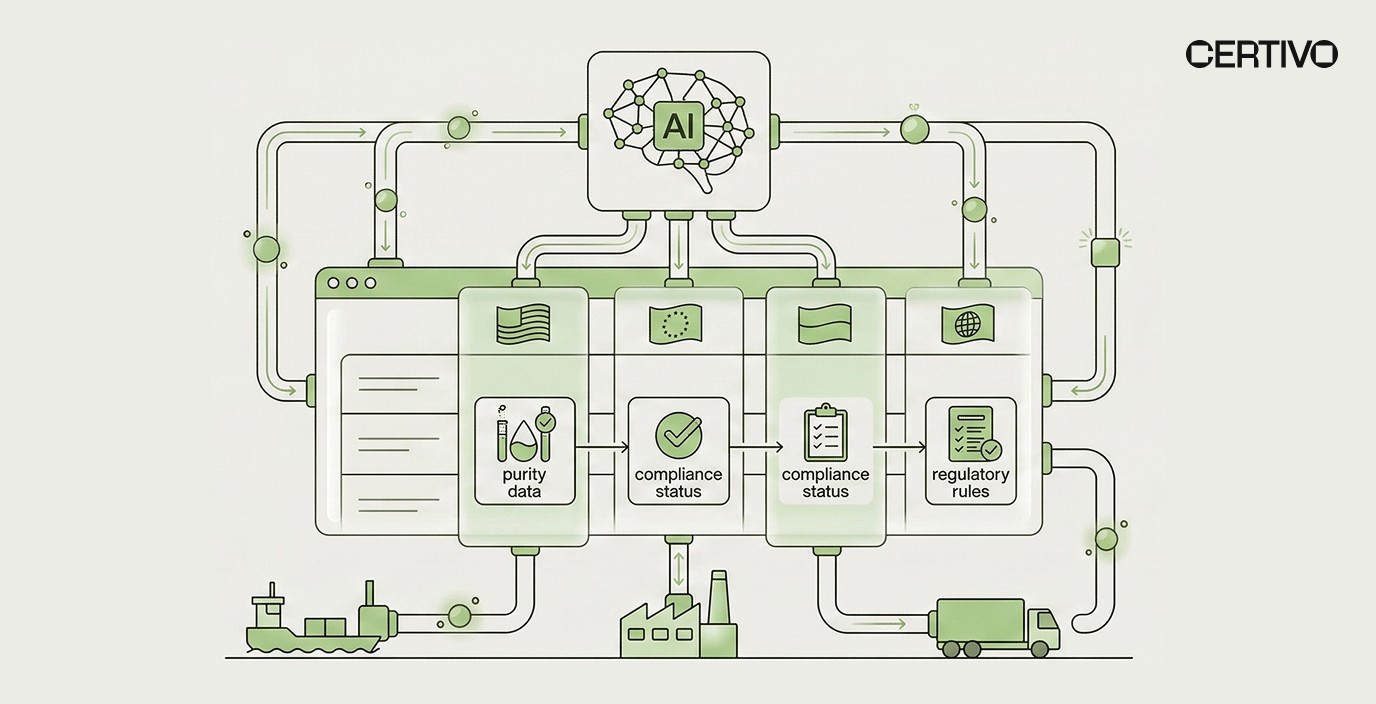
CORA-powered regulatory intelligence automates substance identification by cross-referencing supplier inputs against EPA, ECHA, and state-level PFAS definitions. This eliminates misclassification risks and ensures reporting accuracy across frameworks.
BOM substance and threshold management becomes operationally feasible when substance databases are continuously updated, supplier declarations are parsed automatically, and threshold calculations occur at the part level rather than finished product level. PFAS in electronics manufacturing presents unique challenges due to semiconductor coatings, PCB laminates, and thermal interface materials that often contain intentionally added PFAS.
Key PFAS Regulatory Requirements Across Jurisdictions
Global PFAS regulations impose distinct obligations depending on jurisdiction, product category, and enforcement timeline. Manufacturers operating in multiple markets must reconcile overlapping and sometimes conflicting requirements.
Federal and State-Level PFAS Reporting in the United States
TSCA Section 8(a)(7) PFAS reporting mandates that manufacturers and importers report PFAS use in articles imported or manufactured since 2011. Reporting includes:
CAS numbers for each PFAS substance
Estimated quantities manufactured or imported
Product categories and descriptions
Processing and use information
State-level frameworks impose additional layers. Minnesota PFAS reporting (AMARA's Law) requires disclosure of intentionally added PFAS by July 1, 2026. Maine's PFAS product notification law mandates reporting by January 1, 2025, with prohibition considerations. Washington State's Safer Products for Washington restricts PFAS in specified product categories starting 2027.
Centralized compliance data backbone infrastructure enables manufacturers to maintain jurisdiction-specific datasets while avoiding redundant data collection efforts.
European Union PFAS Restrictions
The EU's REACH Annex XVII PFAS proposal seeks to restrict PFAS in most consumer and industrial applications. Key provisions include:
Phase-out timelines ranging from 18 months to 12 years depending on product category
Threshold limits for unavoidable contamination
Use-specific derogations for essential applications
France PFAS restrictions and EU packaging PFAS bans impose earlier enforcement dates for specific sectors, requiring manufacturers to track jurisdictional variances.
Industries and Product Categories Under PFAS Scrutiny
PFAS restrictions target industries where fluorinated compounds provide functional properties such as water resistance, chemical stability, or thermal performance. Affected sectors include:
Electronics and Semiconductors
Electronics manufacturing relies on PFAS in:
Semiconductor photoresists
PCB laminates and coatings
Thermal interface materials
Cable insulation
Semiconductor compliance requires mapping PFAS to specific manufacturing processes and identifying substitution pathways for non-essential applications.
Automotive and Aerospace
Automotive manufacturers use PFAS in fuel system components, gaskets, seals, and protective coatings. Aerospace and defense applications include hydraulic fluids, fire suppression systems, and specialized lubricants.
Consumer Goods and Textiles
California AB 1817 bans PFAS in textiles, restricting water-repellent treatments in apparel and upholstery. Cosmetics regulations in New Zealand and the EU impose similar constraints. Building materials and construction manufacturers must evaluate PFAS presence in coatings, sealants, and insulation products.
Critical Data Gaps in Traditional PFAS Compliance Workflows
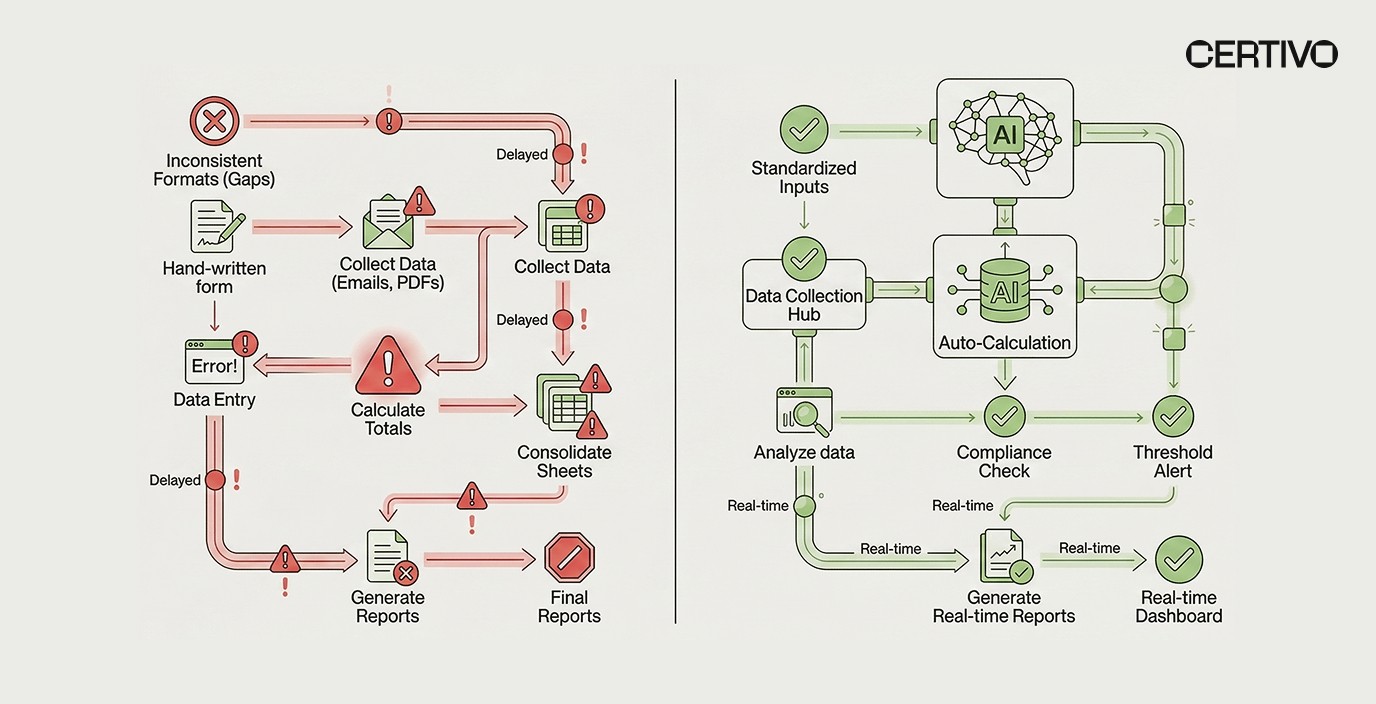
Manual PFAS compliance processes fail due to structural data collection limitations:
Supplier Declaration Inconsistencies
Suppliers provide material disclosures in non-standardized formats:
IPC-1752 declarations (limited PFAS coverage)
Safety Data Sheets (insufficient substance detail)
Generic certifications without substance-level data
Standardized supplier questionnaire frameworks ensure consistent data capture while reducing supplier burden through pre-populated substance libraries.
Threshold Calculation Errors
Manufacturers must aggregate PFAS concentrations across components to determine finished product compliance. Manual calculations introduce errors when:
Component weights change during design revisions
Supplier data contains conflicting units of measure
Regulatory thresholds apply at different product levels
BOM-level material mapping automates threshold calculations by linking substance data to engineering BOMs and recalculating compliance status as designs evolve.
Lack of Real-Time Regulatory Updates
Regulatory intelligence and horizon scanning capabilities ensure organizations receive alerts when:
New PFAS substances are added to restricted lists
Threshold values change
Enforcement dates are modified
Exemptions expire
Struggling with fragmented supplier data and manual PFAS tracking? See how Certivo automates compliance workflows and BOM-level compliance monitoring.
Compliance Risks, Penalties, and Enforcement Exposure
Non-compliance with PFAS regulations triggers financial, operational, and reputational consequences.
Financial Penalties and Market Access Restrictions
TSCA violations: EPA can impose penalties up to $50,120 per violation per day
State-level enforcement: Maine, Minnesota, and Washington impose sales prohibitions for non-compliant products
EU market access: Non-compliant products cannot be placed on the EU market under REACH enforcement
Audit and Disclosure Obligations
Manufacturers face increasing audit scrutiny from:
Regulatory authorities conducting compliance inspections
Customers requiring PFAS declarations for supply chain due diligence
Investors evaluating ESG risks related to hazardous substance management
Continuous audit-ready documentation ensures manufacturers can respond to regulatory requests, customer RFQs, and investor inquiries without scrambling to reconstruct historical substance data.
Product Recall and Redesign Costs
Discovery of non-compliance post-market launch triggers:
Product recalls with associated logistics and disposal costs
Design rework to identify and substitute PFAS-containing components
Supply chain disruption as alternative suppliers are qualified
Proactive compliance risk management shifts organizations from reactive firefighting to preventive substance governance.
How PFAS Regulations Impact Supply Chain Operations
PFAS compliance introduces operational friction across procurement, engineering, and supplier management functions.
Procurement and Supplier Qualification
Procurement teams must:
Evaluate suppliers' ability to provide substance-level declarations
Verify PFAS-free certifications against regulatory definitions
Establish contractual requirements for ongoing substance disclosure
Supplier self-service compliance portals enable suppliers to submit declarations directly into centralized systems, reducing procurement workload and improving data accuracy.
Engineering and Product Development
Design-for-compliance PLM workflows integrate substance restrictions into product development processes:
Engineers receive real-time alerts when selecting components containing restricted PFAS
Design reviews include automated compliance checks before prototype release
Supplier-provided substance data populates engineering BOMs automatically
Multi-Jurisdictional Reporting Complexity
Organizations selling into multiple markets must maintain separate compliance datasets:
US federal reporting under TSCA
State-specific disclosures for Maine, Minnesota, Washington, California, and others
EU REACH compliance for products sold in European markets
Country-specific restrictions in Canada, Japan, South Korea, and Australia
Multi-jurisdiction compliance management platforms centralize substance data while generating jurisdiction-specific reports aligned with local regulatory formats. Integrated PLM ERP compliance thread ensures substance data flows seamlessly from supplier inputs through engineering BOMs into finished product compliance records.
Timeline of Global PFAS Enforcement and Future Outlook
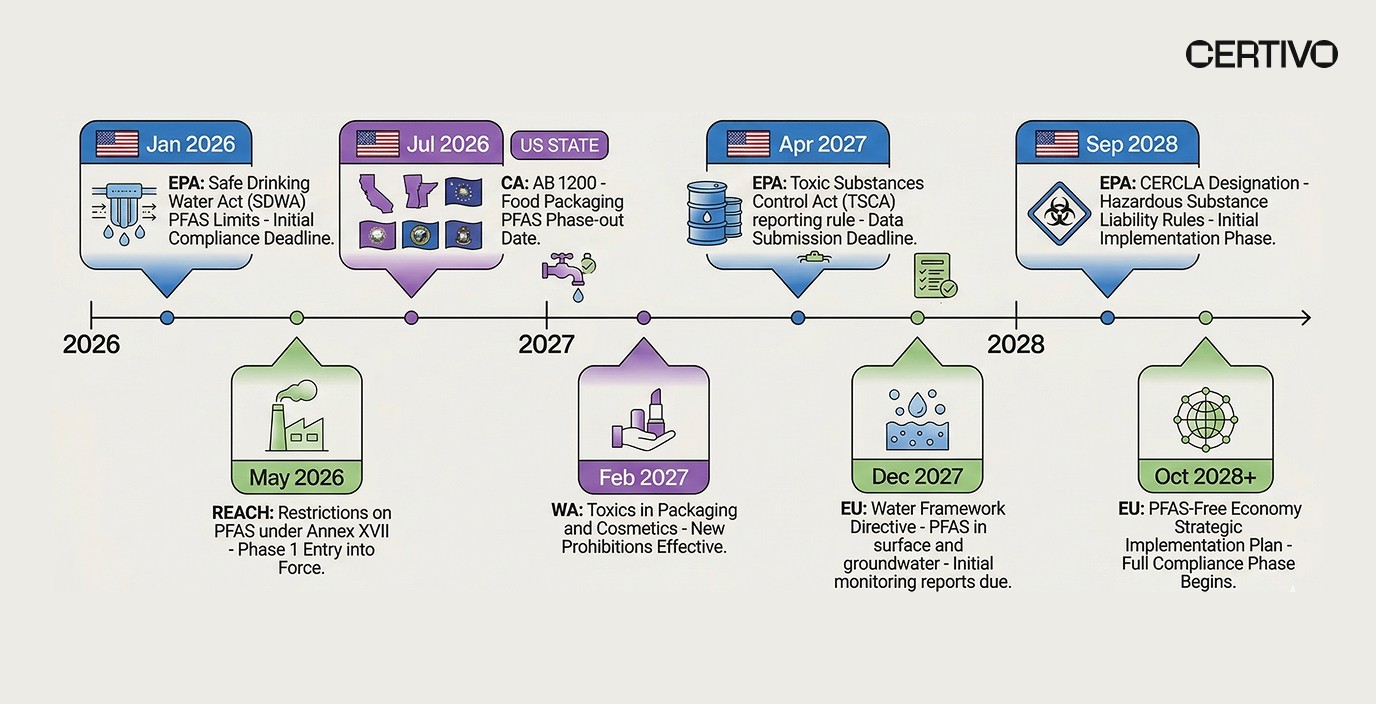
PFAS regulatory enforcement accelerates throughout 2026 and 2027, with critical deadlines requiring immediate preparation.
2026 Compliance Milestones
January 2026: Maine PFAS product notification enforcement begins
July 2026: Minnesota PFAS reporting deadline for intentionally added PFAS
October 2026: TSCA Section 8(a)(7) reporting deadline for PFAS in articles
August 2026: EU packaging PFAS ban takes effect
2027 and Beyond
2027: Washington State PFAS sales restrictions begin for specified product categories
2027-2028: EU REACH PFAS restriction phase-in begins with shortest derogation periods
2028: New Jersey PFAS ban enforcement begins
PFAS compliance in 2026 eliminates the concept of "out of scope" products as regulatory coverage expands across industries and jurisdictions. Organizations delaying PFAS compliance infrastructure face compressed timelines when enforcement begins. Regulatory intelligence and horizon scanning provides early visibility into proposed regulations, enabling proactive substitution planning.
Strategic PFAS Compliance Preparation Framework
Organizations establishing PFAS compliance infrastructure should prioritize foundational capabilities that scale across future regulatory expansions.
Phase 1: Supply Chain Data Foundation
✓ Implement supplier self-service portals for standardized substance declarations
✓ Establish centralized compliance data backbone linking suppliers to parts to products
✓ Deploy AI document parsing and certificate validation to automate supplier input processing
✓ Create BOM-level material mapping connecting substance data to engineering BOMs
Phase 2: Regulatory Monitoring and Threshold Management
✓ Activate regulatory intelligence and horizon scanning for automated PFAS regulation tracking
✓ Configure BOM substance and threshold management with jurisdiction-specific limits
✓ Establish continuous compliance monitoring and audit readiness protocols
✓ Implement supplier risk scoring and due diligence based on declaration quality
Phase 3: Cross-Functional Integration
✓ Integrate design-for-compliance PLM workflows into product development
✓ Connect integrated PLM ERP compliance thread for real-time substance data flow
✓ Deploy customer trust centers and self-service reporting for customer RFQ response
✓ Enable digital passports and traceability IDs for regulatory transparency
Get complete visibility into your PFAS compliance risk — book a demo to see how Certivo automates supply chain data collection and regulatory tracking.
How Digital Tools Help Track PFAS Regulations and Ensure Product Compliance Across Regions
Manual PFAS compliance management fails when regulatory frameworks evolve faster than spreadsheet-based processes can adapt. Digital compliance platforms address operational gaps through automation and intelligence.
Automated Regulatory Monitoring
CORA-driven compliance intelligence continuously monitors regulatory changes across federal, state, and international jurisdictions. Organizations receive automated alerts when:
New PFAS substances are added to restricted lists
Threshold values change for existing restrictions
Reporting deadlines are announced or modified
Product category exemptions are created or removed
Solutions that provide automated alerts eliminate manual regulatory monitoring workloads while ensuring compliance teams never miss critical updates.
BOM-Level Substance Tracking
Tools that help track substance thresholds across BOMs calculate cumulative PFAS concentrations by aggregating supplier-provided substance data against product structures. Automated threshold calculations account for:
Component weight percentages in finished products
Material composition variations across suppliers
Regulatory threshold applicability (homogeneous material vs. finished product)
Supplier Data Collection Automation
Platforms that support standardized product compliance workflows reduce supplier friction through:
Pre-populated substance libraries eliminating manual data entry
Multi-language interfaces supporting global supplier bases
Automated validation rules flagging incomplete or inconsistent submissions
AI-native compliance automation parses supplier certificates, safety data sheets, and technical specifications to extract substance data automatically, reducing manual review cycles from weeks to hours.
Multi-Jurisdiction Reporting Support
Software that helps monitor global regulatory updates and map them to specific SKUs enables organizations to:
Generate jurisdiction-specific compliance reports from a single dataset
Track products requiring different disclosures across markets
Maintain audit trails documenting compliance decision-making
Solutions that support end-to-end product compliance from design through production and shipment create organizational readiness spanning engineering, procurement, and quality functions.
FAQ Section
What tools help track PFAS regulations and ensure product compliance across regions?
Digital compliance platforms with regulatory intelligence and horizon scanning capabilities automatically monitor federal, state, and international PFAS regulations. Certivo's CORA intelligence tracks regulatory changes and maps them to affected products, providing automated alerts when new restrictions impact specific SKUs across jurisdictions.
How do manufacturers comply with emerging PFAS restrictions across supply chains?
Manufacturers establish automated supplier data collection portals that standardize substance declarations from multi-tier suppliers. Certivo enables BOM-level material mapping that calculates threshold compliance automatically as supplier data updates, eliminating manual spreadsheet tracking.
How do compliance teams monitor rapid changes in global chemical regulations?
CORA-powered regulatory intelligence provides continuous monitoring of chemical regulations across 100+ jurisdictions. Automated horizon scanning identifies proposed regulations before enforcement, enabling proactive substitution planning. Certivo's centralized compliance data backbone links regulatory changes to affected products and suppliers automatically.
What platforms help track substance thresholds across BOMs to ensure regulatory limits aren't exceeded?
BOM substance and threshold management systems aggregate component-level substance data and calculate cumulative concentrations against regulatory thresholds. Certivo automatically recalculates compliance status when component weights change or supplier declarations update, preventing threshold violations before production.
How do compliance teams manage batteries and accumulators regulations globally?
Multi-jurisdiction EHS and ESG management platforms track overlapping requirements across EU Batteries Regulation, extended producer responsibility frameworks, and chemical restrictions. Certivo's digital passport and traceability systems support compliance documentation for battery products across jurisdictions.
Conclusion
PFAS compliance across multi-tier supply chains requires operational infrastructure that traditional manual processes cannot deliver. With regulatory enforcement accelerating throughout 2026 and beyond, manufacturers must establish continuous compliance monitoring and audit readiness capabilities that scale across jurisdictions and substance categories.
Organizations implementing AI-native compliance automation shift from reactive regulatory response to proactive substance governance. BOM-level compliance intelligence, automated supplier data collection, and CORA-driven regulatory intelligence create the foundation for sustainable PFAS management as restrictions expand globally.
The cost of delayed action compounds as enforcement dates approach. Manufacturers lacking centralized substance tracking infrastructure face compressed timelines for supplier qualification, product redesign, and regulatory reporting. Replacing spreadsheets with scalable systems enables organizations to manage PFAS compliance alongside REACH, RoHS, conflict minerals, and other substance frameworks within a single platform.
For manufacturers managing complex global supply chains and escalating PFAS obligations, the transition from manual compliance management to automated intelligence is no longer optional. Contact Certivo to see how organizations achieve continuous PFAS compliance readiness across products, suppliers, and jurisdictions.
Vasanth
Vasanth is a skilled Compliance Engineer with over five years of experience specializing in global environmental regulations, including REACH, RoHS, Proposition 65, POPs, TSCA, PFAS, CMRT, EMRT, FMD, and IMDS. With a strong academic foundation in Chemical Engineering from Anna University, he brings a deep technical understanding to compliance processes across complex product lines.
Vasanth excels in analyzing Bills of Materials (BOMs), evaluating supplier declarations, and ensuring regulatory conformity through meticulous review and risk assessment. He is highly proficient in supplier engagement, adept at interpreting material disclosures, and experienced in preparing customer-ready compliance documentation tailored to diverse global standards.
Known for his attention to detail, up-to-date regulatory knowledge, and proactive communication style, Vasanth plays a critical role in maintaining product compliance and advancing sustainability goals within fast-paced, globally integrated manufacturing environments.