


Per- and polyfluoroalkyl substances (PFAS) have become a critical compliance concern for electronics manufacturers as regulations expand across jurisdictions and enforcement intensifies. Tracking PFAS materials across complex, multi-tier electronics supply chains requires substance-level visibility, supplier data verification, and coordinated documentation systems that current manual approaches cannot support at scale.
Electronics manufacturers face unique PFAS tracking challenges due to component miniaturization, global sourcing networks, and the presence of PFAS in insulation materials, circuit board coatings, semiconductor manufacturing processes, and thermal interface materials. This guide examines regulatory requirements, tracking methodologies, and operational frameworks for maintaining PFAS compliance across electronics supply chains in 2026 and beyond.
Table of Contents
Why PFAS Tracking Has Become Critical for Electronics Manufacturers
Regulatory Framework for PFAS in Electronics
Where PFAS Appears in Electronics Manufacturing
PFAS Threshold Requirements and Reporting Triggers
Supply Chain Data Collection Challenges
Compliance Risks and Enforcement Trends
Multi-Tier Supplier Verification Requirements
Regulatory Timeline and Future PFAS Restrictions
Strategic PFAS Tracking Framework
How AI-Native Compliance Automation Enables PFAS Tracking at Scale
Frequently Asked Questions
Conclusion
Why PFAS Tracking Has Become Critical for Electronics Manufacturers
PFAS substances have been widely used in electronics manufacturing for decades due to their thermal stability, chemical resistance, and dielectric properties. However, expanding restrictions across federal, state, and international jurisdictions now require manufacturers to identify, track, and report PFAS presence at substance level across product portfolios.
The operational challenge extends beyond identifying PFAS in finished products. Electronics manufacturers must trace PFAS through complex supply chains where substances may be present in circuit board manufacturing, semiconductor fabrication processes, cable insulation, thermal management materials, and protective coatings applied by multiple supplier tiers.
Semiconductor manufacturers face particular complexity as PFAS compounds are used in photolithography, etching processes, and cleanroom environments. Industrial electronics companies must verify PFAS status across thousands of components from global suppliers with varying data quality and reporting capabilities.
The shift from voluntary PFAS monitoring to mandatory reporting reflects regulatory recognition that traditional substance restrictions at finished product level do not address PFAS used in manufacturing processes. Industrial automation and test and measurement equipment manufacturers now face compliance obligations across multiple frameworks with different thresholds, reporting formats, and enforcement timelines.
Regulatory Framework for PFAS in Electronics
PFAS regulations affecting electronics manufacturers operate at federal, state, and international levels with overlapping but distinct requirements. Understanding the regulatory landscape determines tracking scope, data collection requirements, and reporting obligations.
Federal PFAS Requirements
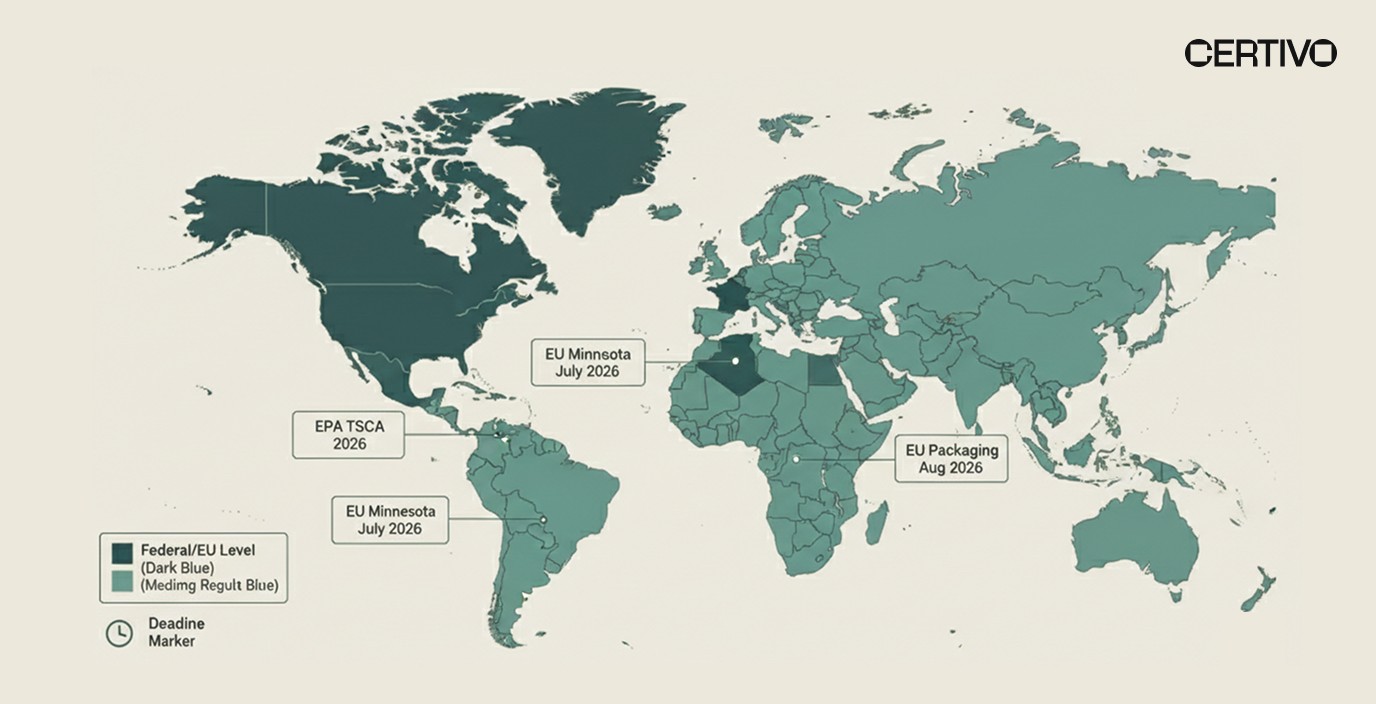
TSCA Section 8(a)(7) PFAS Reporting: The EPA requires manufacturers and importers to report PFAS manufactured or imported since 2011. Electronics manufacturers must identify 12,000+ PFAS compounds potentially present in components, materials, and manufacturing processes.
State-Level PFAS Mandates
Minnesota PFAS Reporting (Amara's Law): Electronics sold in Minnesota require PFAS disclosure by July 1, 2026. Manufacturers must identify intentionally added PFAS and provide reasonable basis for PFAS-free claims.
Massachusetts PFAS Compliance: Annual reporting requirements for products containing intentionally added PFAS. Electronics manufacturers must track PFAS at product category level with supporting documentation.
Connecticut PFAS Labeling: Products containing intentionally added PFAS require labeling by July 2026. Electronics manufacturers must verify PFAS status for consumer-facing products.
Washington State PFAS Ban: Phased PFAS sales restrictions begin 2027 for specific product categories. Electronics manufacturers must identify alternatives where restrictions apply.
International PFAS Restrictions
EU PFAS Packaging Ban: PFAS restrictions in food contact packaging extend to electronics packaging materials by August 2026.
France PFAS Restrictions: Comprehensive PFAS restrictions for products sold in France require substance-level verification and alternative material documentation.
REACH PFAS Restrictions: EU regulatory developments toward broad PFAS restrictions will significantly impact electronics imports. Manufacturers must monitor REACH SVHC updates for PFAS additions.
Where PFAS Appears in Electronics Manufacturing
PFAS compounds are present in numerous electronics components, materials, and manufacturing processes. Identifying PFAS presence requires component-level analysis and process verification across the supply chain.
Common PFAS Applications in Electronics
Circuit Board Manufacturing:
PFAS-based surfactants in electroplating processes
PFAS coatings for moisture and chemical resistance
PFAS in photoresist materials and etching solutions
PFAS-containing flux materials for soldering processes
Semiconductor Fabrication:
PFAS compounds in photolithography chemicals
PFAS-based cleaning agents for wafer processing
PFAS in plasma etching and chemical vapor deposition
PFAS-containing carrier fluids in semiconductor manufacturing
Insulation and Cable Materials:
PFAS in wire and cable insulation coatings
PFAS-treated fabrics for electrical insulation
PFAS in heat-shrink tubing and protective sleeves
PFAS-containing potting compounds and encapsulants
Thermal Management:
PFAS in thermal interface materials and heat sink compounds
PFAS-based thermal pads and gap fillers
PFAS in cooling system fluids and heat transfer materials
PFAS coatings for thermal conductivity enhancement
Surface Treatments and Coatings:
PFAS-based conformal coatings for circuit protection
PFAS in anti-static and anti-fingerprint coatings
PFAS surface treatments for improved solderability
PFAS in water and oil repellent coatings
Component-Level PFAS:
PFAS in capacitor dielectrics and films
PFAS-containing adhesives and bonding materials
PFAS in gaskets, seals, and o-rings
PFAS-treated connectors and housing materials
Understanding where PFAS may be present enables targeted supplier data collection and verification. BOM-level material mapping identifies components and processes requiring PFAS verification.
PFAS Threshold Requirements and Reporting Triggers
PFAS regulations impose different threshold levels, measurement methodologies, and reporting triggers. Electronics manufacturers must understand which thresholds apply to their products and markets.
Threshold Variations by Jurisdiction
Jurisdiction | Threshold | Measurement Basis | Reporting Trigger |
|---|---|---|---|
EPA TSCA 8(a)(7) | Manufacturing/Import | Substance level | Historic + current data |
Minnesota (Amara's Law) | Intentionally added | Product level | Annual notification |
Massachusetts | Intentionally added | Product category | Annual reporting |
Connecticut | Intentionally added | Product level | Labeling requirement |
Washington | Varies by category | Product level | Phase-out by category |
EU (Proposed) | 0.001-1 ppm | Substance/mixture | Varies by application |
Intentionally Added vs. Unintentional Presence: Most state-level regulations focus on intentionally added PFAS, exempting PFAS present as contaminants or byproducts below specific thresholds. However, manufacturers must demonstrate reasonable basis for claims that PFAS is not intentionally added.
Process PFAS vs. Product PFAS: Some regulations cover PFAS used in manufacturing processes even if not present in finished products. Electronics manufacturers must track PFAS in supplier manufacturing processes, not just component materials.
Substance-Level Tracking: Federal TSCA reporting requires identification of specific PFAS compounds, not just total PFAS presence. This necessitates detailed supplier data collection and analytical testing capabilities.
PFAS & chemicals risk management requires understanding threshold variations across jurisdictions and maintaining documentation supporting compliance claims.
Supply Chain Data Collection Challenges
Electronics supply chains typically span 3-5 supplier tiers with thousands of components from global sources. Collecting accurate PFAS data across this complexity represents a significant operational challenge.
Primary Data Collection Obstacles
Supplier Awareness Gaps: Many Tier 2 and Tier 3 suppliers lack awareness of PFAS regulations and may not track PFAS in their materials or processes. Electronics manufacturers must educate suppliers on PFAS requirements and verification expectations.
Data Format Inconsistency: Suppliers provide PFAS information in varying formats including full material declarations, general compliance statements, test reports, and process descriptions. Standardized supplier questionnaire frameworks improve data consistency and completeness.
Multi-Tier Visibility Limitations: Electronics manufacturers typically have direct relationships with Tier 1 suppliers but limited visibility into Tier 2 and Tier 3 material sources. Multi-tier supply chain transparency requires suppliers to cascade PFAS verification requirements downstream.
Process PFAS Documentation: PFAS used in manufacturing processes may not appear on standard material declarations. Manufacturers must specifically request process PFAS information and verify supplier responses.
Language and Technical Barriers: Global supply chains involve suppliers with varying language capabilities and technical understanding of PFAS chemistry. Clear questionnaire design and translated materials reduce response errors.
Response Rate and Quality Issues: Manual supplier data collection through email and spreadsheets produces low response rates and incomplete information. Supplier self-service compliance portals improve response rates through automated follow-up and guided questionnaires.
Testing and Verification Costs: Analytical testing for PFAS presence is expensive and time-consuming. Electronics manufacturers must balance testing costs with compliance risk and prioritize testing for high-risk components and materials.
Compliance Risks and Enforcement Trends
PFAS non-compliance creates financial, operational, and reputational risk for electronics manufacturers as enforcement agencies increase inspection frequency and penalty severity.
Risk Exposure from PFAS Non-Compliance
Regulatory Penalties: EPA TSCA violations carry penalties up to $48,006 per day per violation. State-level PFAS violations result in per-product, per-day penalties. Missing reporting deadlines or providing incomplete data triggers enforcement actions.
Market Access Restrictions: Non-compliant products face sales prohibitions in jurisdictions with PFAS restrictions. Electronics manufacturers risk losing access to major markets including EU, California, and other states with PFAS mandates.
Customer Contract Breaches: Many electronics customers include PFAS-free requirements in purchase agreements. Delivering products containing undisclosed PFAS violates contractual obligations and creates liability exposure.
Supply Chain Disruption: Discovering PFAS in components after product launch requires reformulation, supplier changes, or product withdrawal. Managing compliance risk proactively prevents costly post-launch corrections.
Reputational Impact: PFAS-related compliance failures damage brand reputation and customer trust. Electronics manufacturers face increased scrutiny from customers, investors, and advocacy groups regarding PFAS use.
Enforcement Trends: Regulatory agencies increasingly use data analytics and cross-jurisdiction information sharing to identify non-compliant products. State attorneys general coordinate PFAS enforcement actions across multiple jurisdictions simultaneously.
Multi-Tier Supplier Verification Requirements
PFAS tracking requires verification across supplier tiers where substances may be present in raw materials, manufacturing processes, or component formulations.
Tier-Specific Verification Approaches
Tier 1 Suppliers (Direct Relationships):
Require comprehensive PFAS declarations covering materials and processes
Establish contractual obligations for PFAS disclosure and change notification
Conduct periodic audits verifying PFAS tracking systems and documentation
Implement analytical testing for high-risk components and materials
Tier 2 Suppliers (Component Manufacturers):
Cascade PFAS requirements through Tier 1 supplier contracts
Require Tier 1 suppliers to verify Tier 2 PFAS status
Establish data pass-through requirements ensuring Tier 2 information flows upstream
Prioritize Tier 2 verification for materials with known PFAS applications
Tier 3 Suppliers (Raw Material Providers):
Identify critical raw material suppliers through Tier 1 and Tier 2 mapping
Require material safety data sheets and technical data sheets
Verify PFAS status for base materials used in component manufacturing
Establish alternative material qualification processes for PFAS-containing materials
Process Chemical Suppliers:
Identify suppliers of manufacturing chemicals and processing aids
Verify PFAS status of surfactants, cleaning agents, and process chemicals
Document process changes eliminating PFAS-containing chemicals
Establish approval processes for new process chemical introductions
Centralized supplier self-service portals enable suppliers at all tiers to submit PFAS data through structured questionnaires. Supplier risk scoring and ESG ratings prioritize verification efforts on high-risk suppliers.
Regulatory Timeline and Future PFAS Restrictions
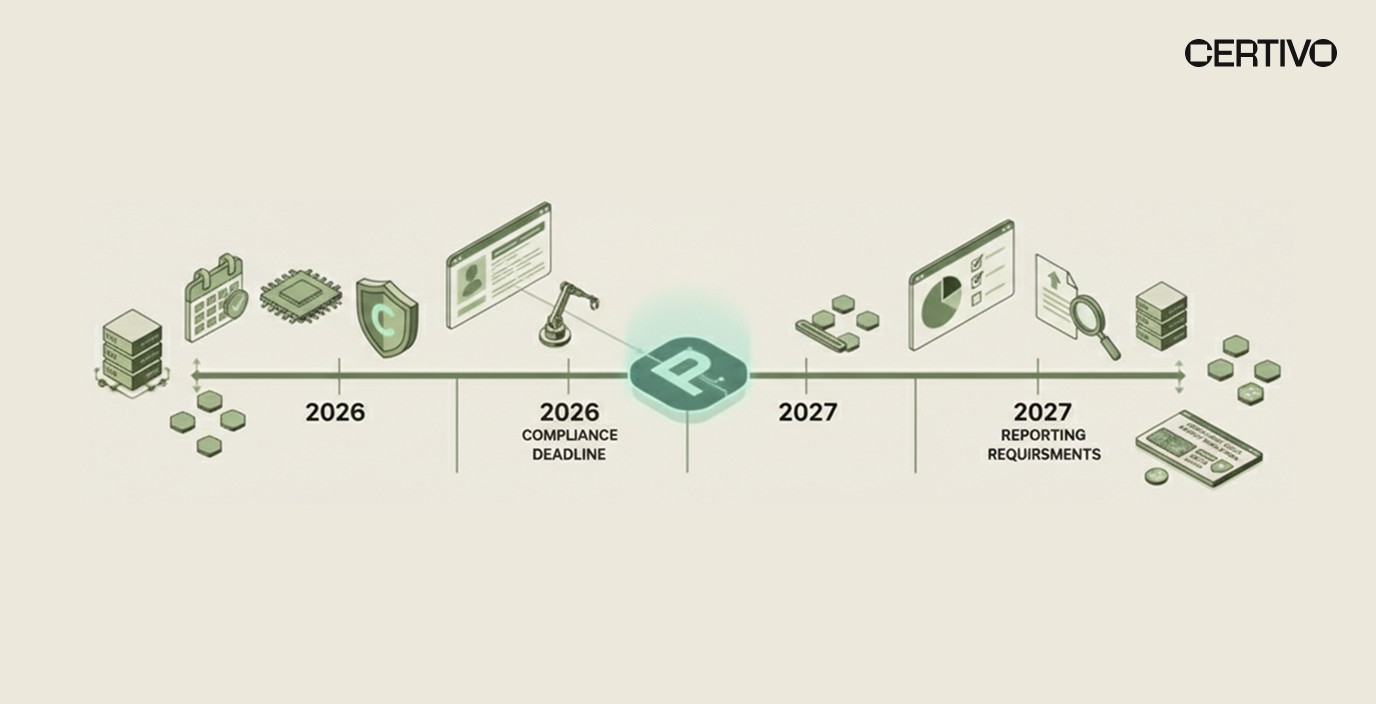
Electronics manufacturers must prepare for multiple PFAS regulatory deadlines across 2026-2027 while monitoring longer-term restriction proposals.
Near-Term PFAS Deadlines (2026-2027)
Federal Requirements:
EPA TSCA Section 8(a)(7) reporting — 2026 deadline for historic and current PFAS data
State-Level Deadlines:
Minnesota PFAS reporting — July 1, 2026
Massachusetts annual reporting — Ongoing from 2026
Connecticut labeling requirements — July 2026
Washington State restrictions — Phased restrictions begin 2027
International Deadlines:
EU Packaging PFAS ban — August 2026
France PFAS restrictions — Phased implementation 2026-2027
Long-Term PFAS Regulatory Outlook
Broad PFAS Restrictions: EU regulatory agencies are developing comprehensive PFAS restrictions covering thousands of compounds across applications. Electronics manufacturers should expect significant limitations on PFAS use in coming years.
Process Chemical Restrictions: Future regulations may restrict PFAS in manufacturing processes even where substances do not remain in finished products. Electronics manufacturers must identify PFAS-free manufacturing alternatives.
Extended Producer Responsibility: Extended Producer Responsibility programs may require electronics manufacturers to manage PFAS-containing products at end-of-life.
Digital Product Passports: EU Batteries Regulation digital passport requirements may expand to other product categories, requiring substance-level transparency including PFAS presence.
Strategic PFAS Tracking Framework
Reactive PFAS compliance approaches fail when regulations multiply and supplier data requirements expand. Strategic PFAS tracking infrastructure treats substance monitoring as continuous operational capability.
Core Elements of PFAS Tracking System
1. Comprehensive PFAS Substance Library
Maintain substance library covering 12,000+ PFAS compounds with CAS numbers, chemical names, and synonyms. Link PFAS substances to regulatory frameworks and threshold requirements. Update library as new PFAS definitions and scope expansions occur.
2. BOM-Level PFAS Mapping
Implement BOM-level compliance intelligence linking PFAS presence to specific components, materials, and manufacturing processes. Enable substance-level queries across product portfolios identifying PFAS exposure by product line, customer, or market.
3. Structured Supplier Data Collection
Deploy supplier self-service portals with PFAS-specific questionnaires covering intentionally added PFAS, process PFAS, and manufacturing aids. Automate follow-up sequences for incomplete responses. Track supplier response rates and data quality metrics.
4. Multi-Tier Verification Protocols
Establish verification requirements cascading through supplier tiers. Require Tier 1 suppliers to obtain and pass through Tier 2 and Tier 3 PFAS data. Prioritize verification on high-risk components and materials based on known PFAS applications.
5. Analytical Testing Program
Develop risk-based testing strategy prioritizing components with suspected PFAS presence or incomplete supplier data. Maintain approved laboratory network capable of PFAS analysis across different matrices. Track testing results and link to BOM items and supplier declarations.
6. Regulatory Change Monitoring
Implement regulatory intelligence and horizon scanning for PFAS developments across federal, state, and international jurisdictions. Create impact assessment workflows identifying affected products when new PFAS restrictions are proposed or finalized.
7. Alternative Material Qualification
Establish processes for qualifying PFAS-free alternatives when restrictions require material substitutions. Design-for-compliance PLM workflows integrate PFAS status into material selection and approval processes.
8. Customer-Facing PFAS Transparency
Deploy customer trust centers enabling customers to access PFAS declarations and supporting documentation. Provide standardized PFAS-free certificates where applicable. Reduce manual effort responding to customer PFAS questionnaires.
How AI-Native Compliance Automation Enables PFAS Tracking at Scale
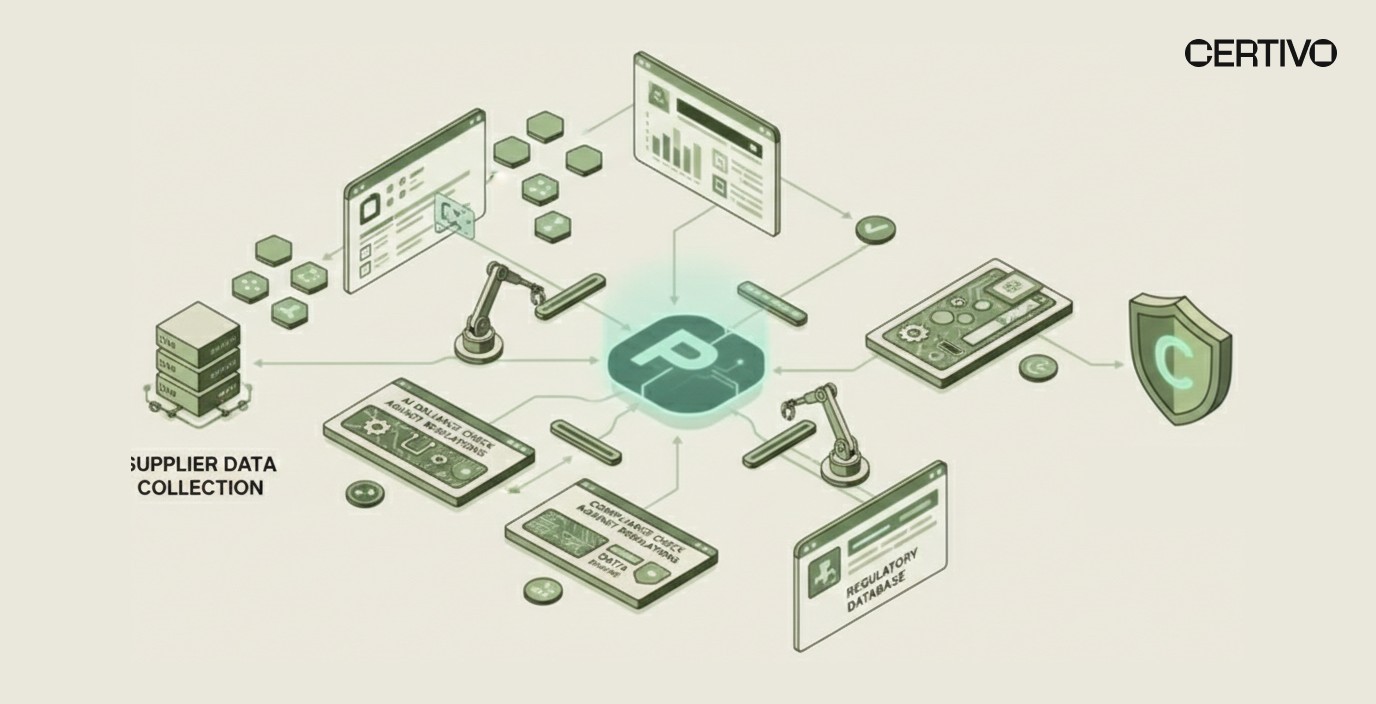
Manual PFAS tracking across thousands of components and multiple supplier tiers cannot scale to meet expanding regulatory requirements. AI-native compliance automation transforms PFAS tracking from reactive data collection to proactive substance management.
AI Capabilities for PFAS Tracking
Automated Document Intelligence: AI systems extract PFAS data from supplier declarations, test reports, safety data sheets, and technical specifications without manual data entry. CORA intelligence identifies PFAS-related information in unstructured documents and populates structured databases.
PFAS Compound Recognition: AI analyzes chemical names, CAS numbers, and molecular structures to identify PFAS compounds across 12,000+ substance variations. CORA-driven compliance intelligence flags potential PFAS presence based on chemical nomenclature patterns and functional groups.
Supplier Response Optimization: AI prioritizes supplier follow-up based on component risk, regulatory deadlines, and historic response patterns. Automated escalation workflows route unresponsive suppliers to procurement teams for contractual enforcement.
Multi-Framework Cross-Mapping: CORA-powered regulatory intelligence maps PFAS data across different regulatory requirements automatically. Single supplier declaration populates EPA TSCA reporting, state-level notifications, and EU REACH submissions without duplicate data entry.
Substance-Level Risk Analysis: AI analyzes BOM data to identify products containing PFAS or at risk of containing PFAS based on component categories and material types. Predictive analytics flag components requiring enhanced verification before regulatory deadlines.
Regulatory Change Impact Assessment: CORA's regulatory intelligence layer monitors PFAS regulatory developments and automatically identifies affected products and components. When new PFAS restrictions are proposed, AI generates impact reports showing exposure by product line and customer.
Alternative Material Recommendation: AI suggests PFAS-free material alternatives based on component function, performance requirements, and supplier availability. Machine learning analyzes successful material substitutions to inform future qualification decisions.
AI-native compliance automation enables electronics manufacturers to track PFAS across thousands of components while maintaining continuous audit-ready documentation. Electronics supply chains in 2026 require automated systems connecting supplier data, regulatory requirements, and product portfolios.
Frequently Asked Questions
How can electronics manufacturers identify which components contain PFAS?
Electronics manufacturers must collect supplier declarations, conduct analytical testing on high-risk components, and maintain substance libraries linking PFAS compounds to component categories. BOM-level material mapping connects supplier PFAS data to specific components. Certivo’s AI-powered compliance platform, powered by CORA intelligence, automatically analyzes supplier data and material specifications to identify and flag potential PFAS risks at the component level.
What documentation is required to demonstrate PFAS compliance?
PFAS compliance documentation includes supplier PFAS declarations, laboratory test reports, material safety data sheets, manufacturing process records, and PFAS-free certificates. Continuous audit-ready documentation maintains version-controlled compliance records. Certivo centralizes and automates this process using CORA intelligence, ensuring documentation remains complete, audit-ready, and aligned with PFAS regulations.
How should electronics manufacturers handle incomplete supplier PFAS data?
Manufacturers should enforce PFAS disclosure requirements, implement automated follow-ups, escalate non-responsive suppliers, and conduct risk-based testing. Supplier self-service portals improve response rates through structured data collection. Certivo enhances this with AI-driven supplier workflows and CORA intelligence to identify missing PFAS data and accelerate supplier compliance resolution.
What is the difference between intentionally added PFAS and PFAS presence?
Intentionally added PFAS are deliberately used for functional purposes, while PFAS presence includes both intentional use and unintended contamination. Regulations require manufacturers to demonstrate due diligence in verifying PFAS status. Certivo supports this by using CORA intelligence to analyze supplier data and provide clear visibility into PFAS risks across products and components.
How can electronics manufacturers prepare for future PFAS restrictions?
Manufacturers should identify PFAS-containing materials, qualify PFAS-free alternatives, implement compliance-focused design processes, and monitor regulatory changes. PFAS & chemicals risk management requires proactive compliance strategies. Certivo enables this using AI-powered regulatory monitoring and CORA intelligence to identify risks, support safer alternatives, and ensure continuous compliance readiness.
Conclusion
PFAS tracking in electronics manufacturing has evolved from voluntary substance monitoring to mandatory reporting across expanding federal, state, and international regulations. Electronics manufacturers maintaining market access across jurisdictions require systematic PFAS tracking infrastructure covering BOM-level substance identification, multi-tier supplier verification, and coordinated documentation systems.
The compressed timeline of PFAS deadlines in 2026-2027 demands immediate action. Manual approaches using spreadsheets and email cannot collect, verify, and report PFAS data across thousands of components and multiple supplier tiers within available timeframes.
AI-native compliance automation enables electronics manufacturers to track PFAS at scale through automated supplier data collection, substance-level analysis, and multi-framework reporting. Organizations implementing centralized PFAS tracking systems position compliance as strategic capability rather than operational burden. Explore how Certivo supports PFAS tracking and regulatory readiness across complex electronics supply chains.
Vasanth
Vasanth is a skilled Compliance Engineer with over five years of experience specializing in global environmental regulations, including REACH, RoHS, Proposition 65, POPs, TSCA, PFAS, CMRT, EMRT, FMD, and IMDS. With a strong academic foundation in Chemical Engineering from Anna University, he brings a deep technical understanding to compliance processes across complex product lines.
Vasanth excels in analyzing Bills of Materials (BOMs), evaluating supplier declarations, and ensuring regulatory conformity through meticulous review and risk assessment. He is highly proficient in supplier engagement, adept at interpreting material disclosures, and experienced in preparing customer-ready compliance documentation tailored to diverse global standards.
Known for his attention to detail, up-to-date regulatory knowledge, and proactive communication style, Vasanth plays a critical role in maintaining product compliance and advancing sustainability goals within fast-paced, globally integrated manufacturing environments.