

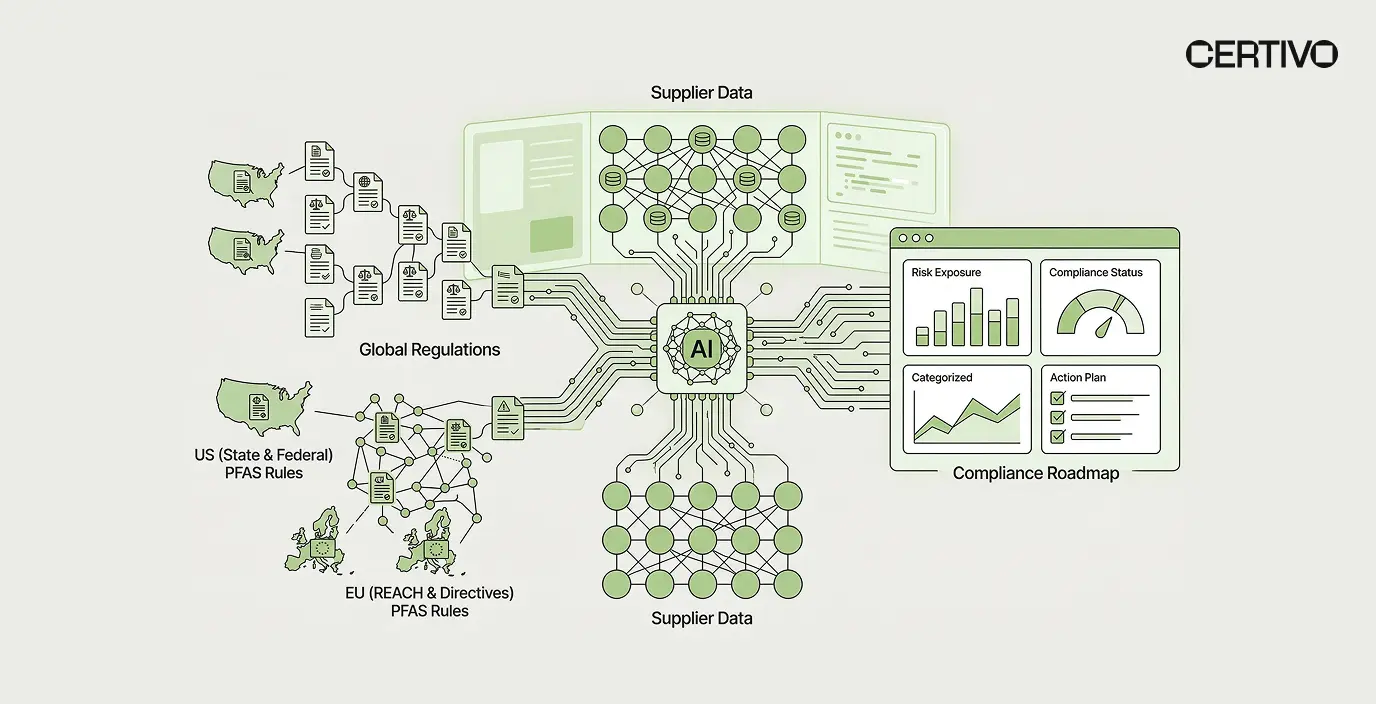
Per- and polyfluoroalkyl substances (PFAS) regulations are fragmenting across federal, state, and EU jurisdictions at an unprecedented rate. Manufacturers operating across multiple markets face conflicting definitions, non-aligned phase-out schedules, and product-specific thresholds that change without coordinated notice periods. Tracking PFAS regulations across US and EU jurisdictions now requires infrastructure capable of monitoring over 12,000 chemical variants across dozens of regulatory frameworks simultaneously.
The compliance gap is not knowledge-based. It is operational. Companies understand that PFAS compliance in 2026 is no longer optional. What they lack is the ability to connect regulatory updates to specific SKUs, trigger design reviews when thresholds change, and maintain audit-ready records across BOM structures that span multiple suppliers and jurisdictions.
Table of Contents
Why PFAS Regulatory Tracking Has Become Operationally Unmanageable
US Federal PFAS Framework: TSCA Section 8(a)(7) and EPA Enforcement
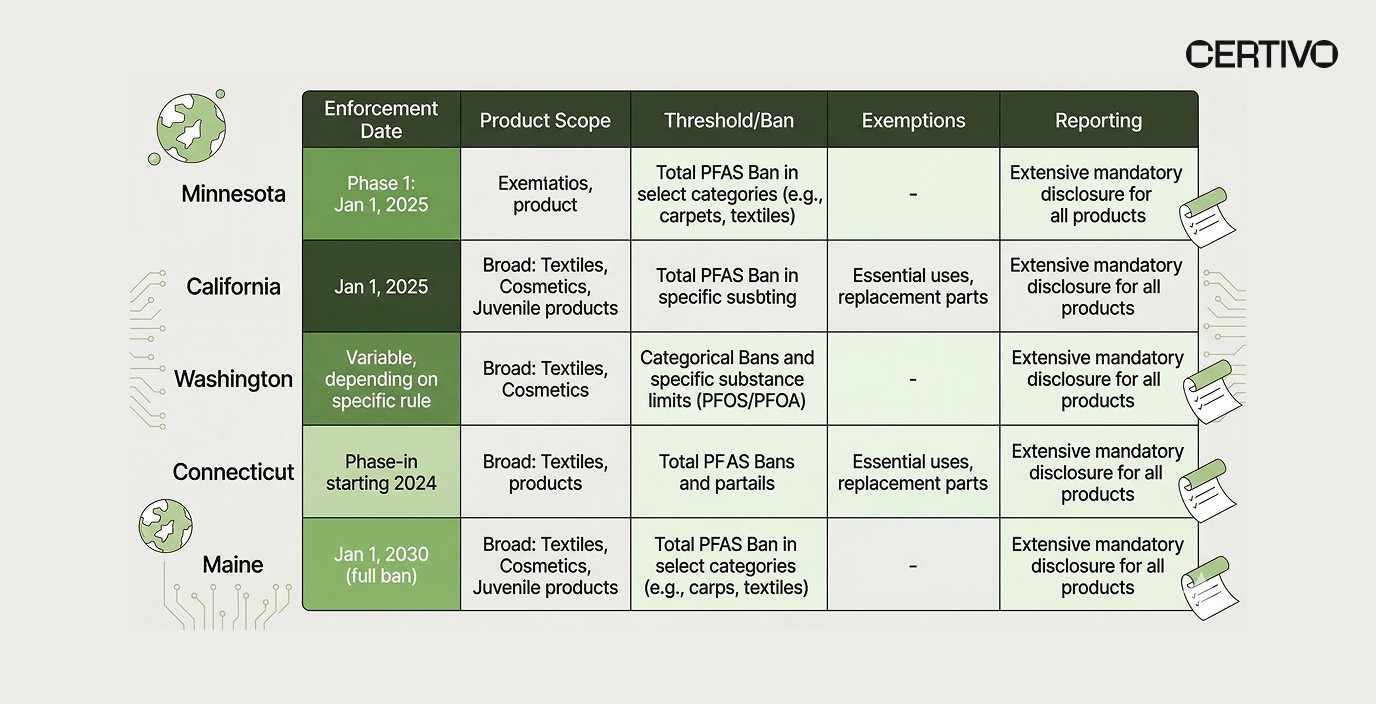
US State-Level PFAS Regulations: Diverging Definitions and Timelines
EU PFAS Restrictions: REACH Annex XVII and the Universal Phase-Out Proposal
Product-Specific PFAS Restrictions Across Packaging, Textiles, and Firefighting Foam
Compliance Risks, Penalties, and Enforcement Precedents
What Solutions Provide Automated Alerts When Regulations Affecting Parts or SKUs Change?
What Software Helps Monitor Global Regulatory Updates and Map Them to Specific SKUs?
What Tools Support End-to-End Product Compliance from Design Through Production and Shipment?
How AI Automates Multi-Jurisdiction PFAS Compliance at BOM Level
Frequently Asked Questions
Conclusion
Why PFAS Regulatory Tracking Has Become Operationally Unmanageable
PFAS regulations do not follow a unified global standard. The EPA defines PFAS under TSCA Section 8(a)(7) as substances containing at least one fully fluorinated carbon atom. The EU's proposed universal restriction under REACH Annex XVII uses a broader structural definition. Individual US states apply product-specific bans with varying thresholds and exemption categories.
Manufacturers face three operational failures when tracking PFAS regulations manually:
Jurisdictional Fragmentation – California, Minnesota, Connecticut, and Maine enforce different reporting deadlines, product scope definitions, and exemption structures. Minnesota's PFAS reporting law requires disclosure by July 2026, while Washington State's sales ban takes effect in 2027 with narrower product categories.
BOM-Level Blind Spots – PFAS presence is determined at the component and material level, not the finished product level. BOM-level compliance intelligence is the only scalable method to link substance data to finished goods.
Regulatory Velocity Exceeds Manual Monitoring – New PFAS restrictions are proposed quarterly. Regulatory intelligence and horizon scanning systems must flag changes before enforcement begins, not after product launches.
Book a free compliance assessment to understand your PFAS exposure across products and supply chains.
US Federal PFAS Framework: TSCA Section 8(a)(7) and EPA Enforcement
The EPA's TSCA Section 8(a)(7) PFAS reporting rule requires manufacturers and importers to report all PFAS use in articles from 2011 onward. The October 2026 deadline applies to approximately 12,000 chemical substances, making manual compliance structurally impossible without AI document parsing and certificate validation.
📊 What Must Be Reported:
✓ PFAS manufactured or imported in articles
✓ Manufacturing volumes by year (2011-2026)
✓ Processing and use categories
✓ Disposal and recycling methods
✓ Worker exposure estimates
The EPA has proposed limited exemptions for articles imported in small volumes, but final guidance remains subject to revision. TSCA PFAS reporting exemptions should be monitored continuously, as exemption thresholds may tighten before the deadline.
Manufacturers relying on supplier self-declarations face verification risks. Automated supplier data collection and portals reduce dependency on spreadsheet-based compliance workflows that fail during audits.
US State-Level PFAS Regulations: Diverging Definitions and Timelines
State-level PFAS regulations operate independently of federal frameworks, creating compliance fragmentation that cannot be resolved through centralized checklists. Each state defines PFAS differently, applies product-specific bans, and enforces distinct reporting obligations.
Minnesota (July 1, 2026): Minnesota's PFAS reporting law requires disclosure of PFAS presence in products sold in the state. The law includes Current Unavoidable Use (CUU) exemptions, but exemption applications must be filed with technical justifications demonstrating no feasible alternatives exist.
California (January 1, 2027): California AB 1817 prohibits the sale of textiles containing intentionally added PFAS. The law applies to apparel, accessories, upholstery, and textile furnishings. Manufacturers must verify absence through third-party testing or supplier certifications.
Washington (2027): Washington's PFAS sales ban covers cookware, cosmetics, and textiles. Unlike California, Washington enforces functional necessity exemptions for electronics and medical devices.
Connecticut (July 2026): Connecticut's PFAS labeling law requires consumer-facing labels on products containing intentionally added PFAS. Labeling must identify PFAS presence and provide removal or disposal guidance.
State-level compliance cannot be managed through reactive tracking. Multi-jurisdiction EHS and ESG management platforms centralize state-specific obligations and trigger alerts when product portfolios overlap with new bans.
EU PFAS Restrictions: REACH Annex XVII and the Universal Phase-Out Proposal
The EU is advancing the most comprehensive PFAS restriction proposal globally. The universal PFAS restriction under REACH Annex XVII would ban manufacturing, placing on the market, and use of PFAS across all product categories unless specific derogations apply.
The restriction dossier submitted by Germany, the Netherlands, Denmark, Norway, and Sweden proposes:
✓ Ban on intentional PFAS use across all articles and mixtures
✓ Derogation periods ranging from 5 to 12 years for essential uses
✓ Threshold-based exemptions for trace contamination
✓ Technical justification requirements for continued use claims
Timeline: Public consultation completed, SEAC and RAC opinions expected 2025, final restriction adoption 2026-2027, enforcement begins 2028.
The EU packaging PFAS ban prohibits PFAS in food contact materials starting August 2026. This includes paper, cardboard, and molded fiber packaging. France PFAS restrictions go beyond EU-wide measures, banning PFAS in cookware, cosmetics, and ski wax ahead of broader EU enforcement.
EU PFAS compliance requires BOM-level material mapping. Derogation applications must be substantiated with technical evidence, supplier certifications, and alternative analysis documentation.
Product-Specific PFAS Restrictions Across Packaging, Textiles, and Firefighting Foam
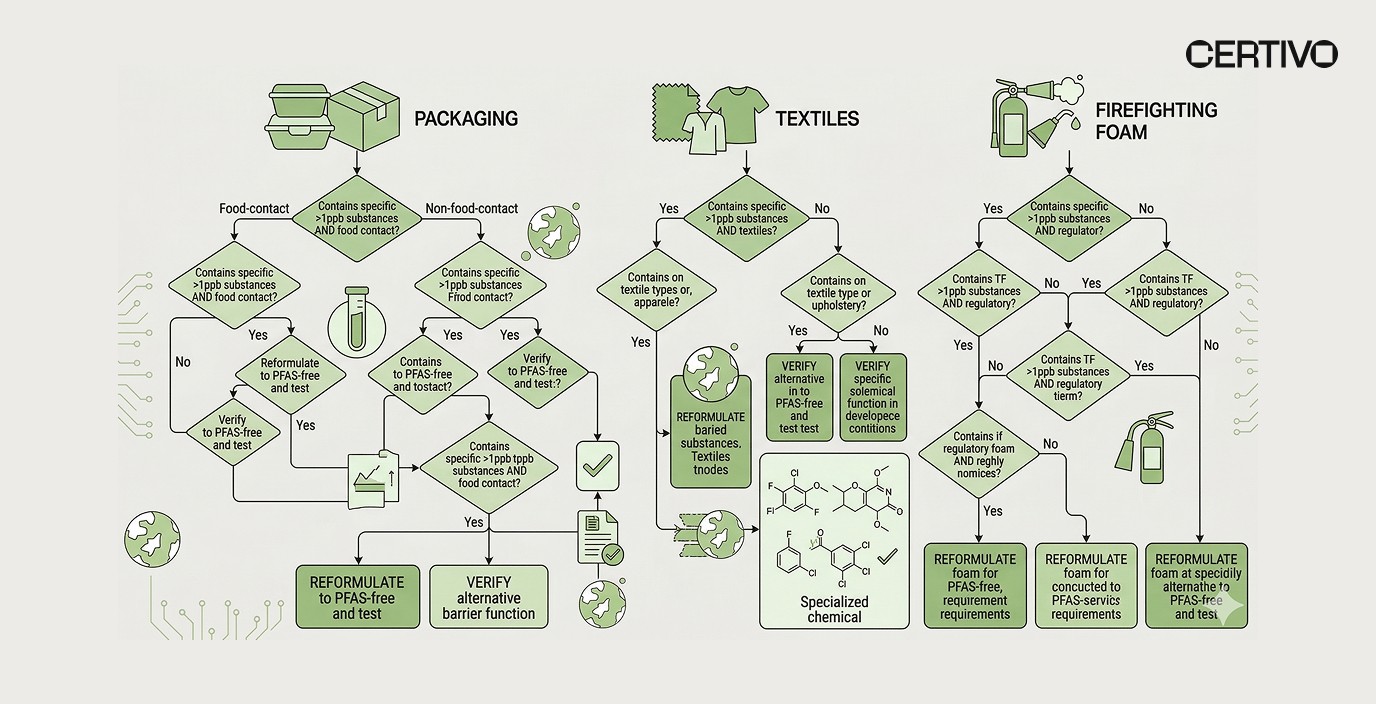
PFAS bans are increasingly product-specific, requiring manufacturers to map substance use across distinct product lines and enforce compliance controls that vary by market and application.
📦 Packaging and Food Contact Materials: The EU packaging PFAS ban and similar US state restrictions eliminate the use of PFAS-based coatings in grease-resistant paper, molded fiber containers, and take-out packaging. Reformulation to water-based or mineral-based alternatives is required.
👕 Textiles and Apparel: California's textile PFAS ban and similar restrictions in Washington and Maine force apparel manufacturers to audit chemical treatments across global supply chains. PFAS and chemicals risk management must extend to component-level material disclosures for water-repellent outerwear, stain-resistant upholstery, and protective workwear.
🔥 Firefighting Foam: The UK REACH PFAS firefighting foam ban takes effect in 2026, with limited exemptions for aviation and defense. Manufacturers must transition to fluorine-free foam (F3) formulations and maintain legacy product documentation for liability purposes.
Product-specific restrictions require specialized substance reporting solutions that link chemical data to finished goods categories and trigger compliance actions when formulations or markets change.
Compliance Risks, Penalties, and Enforcement Precedents
PFAS enforcement is escalating across US and EU jurisdictions. Penalties include market access restrictions, product recalls, administrative fines, and criminal liability for willful non-compliance.
⚠ US Federal Penalties (TSCA): Up to $50,000 per violation per day. Applies to failure to report, late submissions, and false statements. Criminal penalties for knowing violations. EPA enforcement actions increasingly target importers who rely on unverified supplier declarations.
California: Product recalls for non-compliant labeling, civil penalties under Proposition 65, private enforcement actions through citizen suits.
Maine: Product seizure for banned categories, retailer liability for non-compliant inventory, public disclosure of violators.
🔍 EU Market Surveillance: Border inspections for imports, market surveillance authority testing, mandatory product withdrawals, administrative fines up to 4% of annual revenue. The EU REACH framework empowers member states to enforce substance restrictions independently.
Compliance risk escalates when companies cannot answer basic audit questions: Which SKUs contain PFAS-treated materials? What documentation supports exemption claims? How do you verify supplier certifications?
Supplier risk scoring and due diligence systems flag high-risk suppliers before enforcement actions occur.
What Solutions Provide Automated Alerts When Regulations Affecting Parts or SKUs Change?
Manufacturers need compliance platforms that monitor regulatory frameworks continuously and map changes to specific product portfolios in real time. Regulatory intelligence and horizon scanning systems track PFAS proposals, enforcement updates, and threshold revisions across US federal, state, and EU jurisdictions.
Certivo's CORA-powered regulatory intelligence monitors legislative activity and automatically identifies affected SKUs based on BOM-level compliance intelligence. When a PFAS threshold changes in Minnesota or a new ban is proposed in California, CORA:
✓ Flags impacted product categories
✓ Maps affected SKUs based on BOM structure
✓ Triggers compliance workflow assignments
✓ Generates jurisdiction-specific action items
This eliminates the three-month lag between regulatory changes and internal compliance responses. Automated supplier data collection ensures new substance disclosures are requested immediately when regulations expand.
Manual monitoring cannot scale when 50+ jurisdictions update PFAS frameworks quarterly. CORA-driven compliance intelligence converts regulatory noise into actionable alerts tied to specific parts, components, and finished goods.
See how Certivo automates PFAS compliance across your product portfolio and supply chain.
What Software Helps Monitor Global Regulatory Updates and Map Them to Specific SKUs?
PFAS compliance requires software that integrates regulatory monitoring with BOM-level product data. Generic legal update services provide text summaries but cannot connect regulatory changes to manufacturing operations.
Certivo's platform combines three layers:
1. Regulatory Intelligence Layer: Regulatory intelligence and horizon scanning tracks PFAS frameworks across all enforcement jurisdictions. CORA monitors US federal EPA guidance updates, state legislative proposals, EU REACH consultations, and member state national restrictions.
2. BOM Mapping Layer: BOM substance and threshold management links regulatory thresholds to material-level substance data. When a PFAS restriction is proposed, the system identifies which BOMs contain affected substances, calculates compliance gaps based on current formulations, and flags SKUs requiring reformulation or testing.
3. Workflow Automation Layer: Continuous compliance monitoring and audit readiness triggers internal actions automatically. Compliance teams receive task assignments for impacted product lines, supplier data request templates, jurisdiction-specific reporting checklists, and audit documentation requirements.
This integration eliminates manual cross-referencing between legal databases and product portfolios. Centralized compliance data backbone platforms ensure regulatory changes flow directly into operational workflows.
What Tools Support End-to-End Product Compliance from Design Through Production and Shipment?
PFAS compliance spans the entire product lifecycle. End-to-end product compliance requires integrated infrastructure that connects design engineering, procurement, quality assurance, and regulatory teams.
Design-Stage Compliance: Design-for-compliance PLM workflows embed substance restrictions into material selection processes. Engineering teams receive real-time alerts when specifying PFAS-containing components in jurisdictions with active bans.
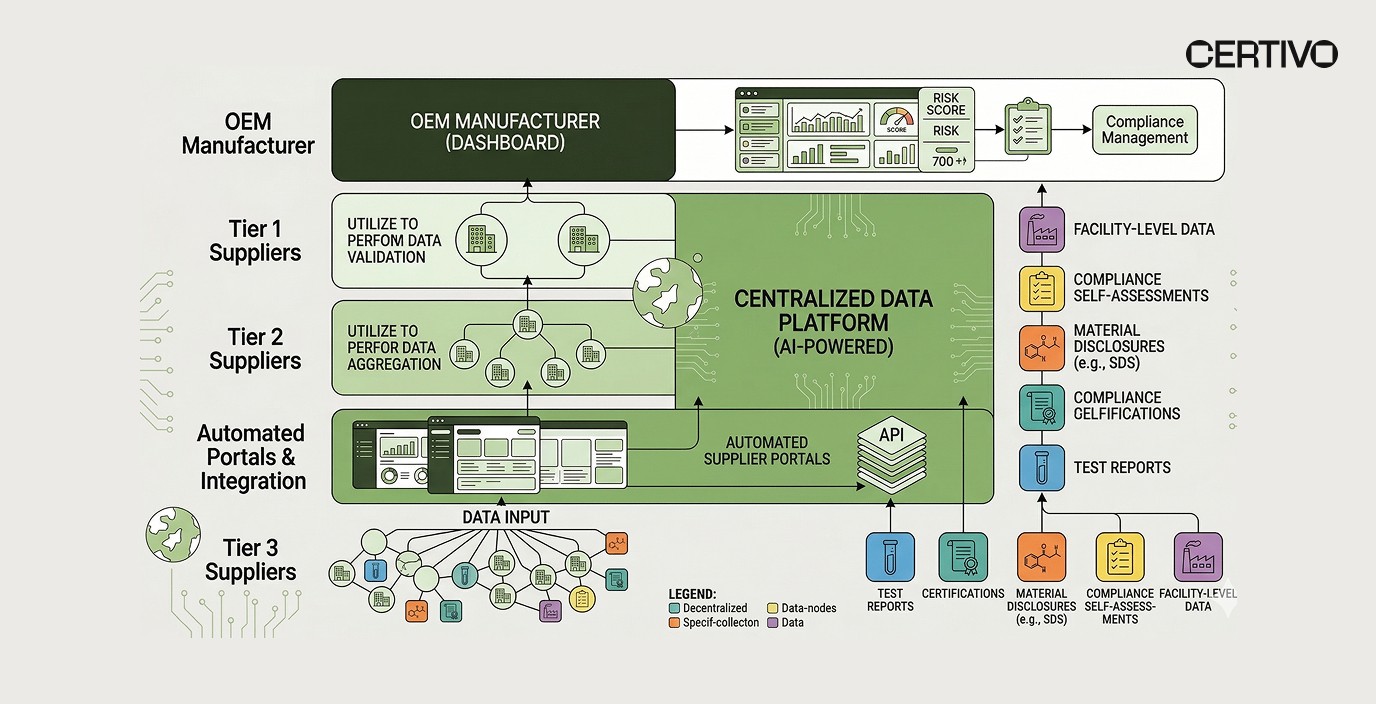
Procurement and Supplier Management: Supplier self-service compliance portals standardize substance disclosure collection across all tiers. AI document parsing and certificate validation extracts substance data automatically from mill test reports, safety data sheets, supplier declarations, and third-party testing certificates.
Production Validation: BOM-level material mapping connects supplier certifications to finished goods SKUs. Quality teams verify all components have valid substance disclosures, PFAS thresholds are not exceeded in any jurisdiction, and exemption documentation is current.
Shipment and Market Access: Multi-jurisdiction EHS and ESG management generates market-specific compliance declarations automatically. Export teams receive jurisdiction-specific substance reports, regulatory compliance certificates, and customer-requested material disclosures.
This lifecycle integration eliminates compliance blind spots where design decisions create supply chain liabilities or production delays trigger market access failures.
How AI Automates Multi-Jurisdiction PFAS Compliance at BOM Level
AI-native compliance platforms eliminate the manual effort required to track 12,000 PFAS substances across dozens of jurisdictions and thousands of SKUs. AI-native compliance automation operates at three levels:
1. Regulatory Intelligence Layer (CORA-Powered): Certivo's CORA-powered regulatory intelligence monitors PFAS proposals, enforcement updates, and threshold changes across US federal, state, and EU frameworks. When a new restriction is proposed, CORA identifies affected product categories, maps impacted SKUs based on BOM data, triggers compliance workflow assignments, and generates jurisdiction-specific reporting templates. CORA intelligence eliminates manual regulatory monitoring.
2. AI Document Parsing and Certificate Validation: Suppliers submit certifications in PDF, Excel, and scanned formats. AI document parsing extracts substance data, validates against regulatory thresholds, and flags inconsistencies automatically. Data is mapped to BOMs without manual entry.
3. BOM-Level Compliance Intelligence: BOM-level compliance intelligence connects substance data to finished goods in real time. When a PFAS threshold changes in Minnesota, Certivo identifies which SKUs contain affected materials, calculates compliance gaps, triggers reformulation workflows if thresholds are exceeded, and generates audit-ready documentation for exempt products.
4. Supplier Self-Service Portals: Supplier self-service compliance portals standardize data collection across all tiers. Suppliers receive automated questionnaire requests, upload certifications directly to the platform, complete substance disclosures in structured formats, and receive real-time validation feedback.
5. Multi-Framework Compliance Coverage: Companies subject to REACH, RoHS, Prop 65, and conflict minerals regulations require unified compliance infrastructure. Certivo's multi-jurisdiction EHS and ESG management platform eliminates redundant supplier data requests.
Frequently Asked Questions
How do manufacturers ensure supplier PFAS certifications are valid and up-to-date?
Supplier self-service compliance portals enforce structured data collection and version-control all certifications tied to manufacturing dates. AI document parsing validates submitted certificates against jurisdiction-specific thresholds and flags expired or inconsistent documentation automatically.
What happens when a PFAS threshold changes after a product has been launched?
BOM-level compliance intelligence identifies which SKUs are affected based on material composition. CORA-powered regulatory intelligence triggers reformulation workflows, design reviews, and supplier re-certification requests automatically when thresholds tighten in any jurisdiction.
Can manufacturers use the same PFAS compliance data for multiple regulatory frameworks?
Yes. Centralized compliance data backbone platforms store substance data once and map it to REACH, RoHS, TSCA, and state-specific requirements. This eliminates redundant supplier data requests and ensures consistency across all regulatory filings.
How do manufacturers track PFAS in components sourced from Tier 2 and Tier 3 suppliers?
Multi-tier supply chain transparency requires cascading data requests through supplier networks. Automated supplier data collection portals allow Tier 1 suppliers to request substance disclosures from sub-tier suppliers and consolidate responses in standardized formats.
What documentation is required during a PFAS compliance audit?
Auditors require material-level substance data linked to specific SKUs, third-party testing results for threshold verification, version-controlled supplier certifications tied to manufacturing dates, and jurisdiction-specific regulatory filings. Continuous audit-ready documentation platforms maintain all evidence in a centralized system accessible during inspections.
Conclusion
Tracking PFAS regulations across US and EU jurisdictions is no longer a monitoring exercise. It is an infrastructure requirement. Manufacturers cannot scale compliance through manual tracking, generic supplier questionnaires, or spreadsheet-based substance databases. The regulatory velocity exceeds human capacity to consolidate updates, verify supplier claims, and produce audit-ready documentation.
The compliance gap is operational, not informational. Companies know PFAS restrictions are expanding. What they lack is the ability to connect regulatory changes to specific SKUs in real time, validate supplier certifications at BOM level, and maintain version-controlled documentation across multiple enforcement timelines.
Certivo's AI-native compliance automation platform eliminates manual PFAS tracking by centralizing regulatory intelligence, automating supplier data collection, and enforcing BOM-level compliance intelligence across all product lines. CORA-driven regulatory monitoring ensures manufacturers receive actionable alerts before enforcement begins, not after product launches.
PFAS compliance in 2026 is continuous, multi-jurisdictional, and BOM-specific. Infrastructure built for that reality will scale. Reactive tracking will fail.
Book a demo to see how Certivo automates PFAS compliance across your product portfolio and supply chain—or get a free compliance risk assessment to understand your current PFAS exposure across products and jurisdictions.
Hari prasanth
Hariprasanth is a Chemical Compliance Specialist with nearly four years of experience, underpinned by a degree in Chemical Engineering. He brings in-depth expertise in global product compliance, working across key regulations such as REACH, RoHS, TSCA, Proposition 65, POPs, FMD, and PFCMRT.
Hariprasanth specializes in reviewing technical documentation, validating supplier inputs, and ensuring that products consistently meet regulatory standards. He works closely with cross-functional teams and suppliers to collect accurate material data and deliver clear, audit-ready compliance reports that stand up to scrutiny.
Through his strong analytical skills and regulatory insight, Hariprasanth enables organizations to navigate evolving compliance challenges while aligning with sustainability initiatives in an increasingly dynamic regulatory environment.